Prime Minister Office of Ethiopia Press Briefing (June 9, 2021)

Billene Seyoum, Press Secretary for the Office of the Prime Minister of thiopia, Dr. Lia Tadesse, Minister of Health of the Federal Democratic Republic of Ethiopia and Mr. Mitiku Kassa, Commissioner for the National Disaster Risk Management Commission of Ethiopia (NDRMC) has delivered the press briefing.

Please click here to watch the whole briefing video:

Kenya’s President Arrives In Ethiopia For Official Working Visit (June 8, 2021)

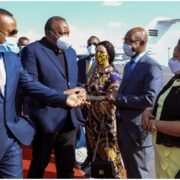
Kenya’s President Uhuru Kenyatta has arrived in Addis Ababa for an official working visit.

Upon arrival at the Addis Ababa Bole International Airport, he was received by senior government officials, including Prime Minister Abiy Ahmed.

During his visit, the President will meet with government officials to discuss issues of mutual concern.

Kenyan Cabinet Secretary For Foreign Affairs Arrives In Ethiopia For Working Visit (June 7, 2021)

The Cabinet Secretary for Foreign Affairs of Kenya Ambassador Raychelle Omamo has today arrived in Ethiopia for a working visit.

Up on her arrival at Bole International Airport, Ambassador Raychelle Omamo has been accorded with warm welcome by State Minister of Foreign Affairs Ministry of Ethiopia, Ambassador Birtukan and other officials.

The Kenyan Parliament Defense and Foreign Relations Committee has recently held a meeting with its Ethiopian counterpart in Addis Ababa on Saturday.

Finance Minister Meets With EU Business Forum Delegation (June 6, 2021)

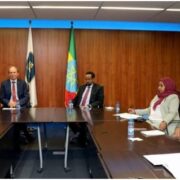
The Finance Minister Ahmed Shede has today received a delegation of the European Union Business Forum led by Erik Habers.

The EU Business Forum started operation in Ethiopia in 2021 comprising close to 300 member companies drawn from several European countries engaged in several areas of investment.

The forum has been serving as a bridge between the companies and the government in line with addressing shortcomings and complaints raised by both sides based on the MoU signed between the syndicate and the respective government institutions.

Members of the delegate pledge commitment to contribute their share in making Ethiopia the best chosen investment destination and jointly work with the Ministry in doing so. They also appreciated Ethiopia’s privatization program.

Ahmed Shede briefed the members of the delegation on the transformative reform in the finance and economic sector of the country and expressed the government’s interest to work hand in hand with the forum. The two agreed to collaborate in facilitating conducive investment climate in Ethiopia.

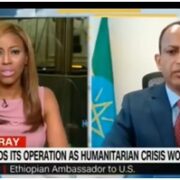
Ethiopian Ambassador Fitsum Arega Interview with CNN (June 5, 2021)

The audio version of Ethiopian Ambassador to the U.S. Fitsum Arega’s interview with CNN “One World” anchor Zain Asher.

Covered: current issues in Ethiopia mainly related to Tigray Region, Ethio-U.S. relations, election & Grand Ethiopian Renaissance Dam GERD.

Council of Ministers Approves Over 561 Bil Birr Proposed Budget for Upcoming FY (June 5, 2021)

The Council of Ministers has approved today 561.67 billion Birr proposed budget for the upcoming Ethiopian fiscal year that begins in July 2021.

In its 97th regular session the Council of Ministers discussed the draft 561.67 billion Birr budget bill for the 2014 Ethiopian fiscal year.

According to a press release of the council, the proposed budget has shown 18 percent an increment when compared to the budget of last Ethiopian fiscal year.

Out of the total 561.67 billion Birr budget for the year, 162 billion Birr is allocated for recurrent spending, 183.5 billion Birr for capital expenditure, 203.95 billion Birr for subsidy to regions, and 12 billion Birr for sustained development goals, it added.

After an extensive deliberation of the budget draft bill, the council of ministers has approved the bill and referred it to the House of People’s Representatives.

The Council of Ministers has also approved additional budget amounting to 26.4 billion Birr for government expenditure for the coming months.

The expenses incurred following the law enforcement operation in Tigray, provision of emergency aid to citizens affected by drought, displaced and returnees as well as prevention of COVID-19, subsidy for fertilizer, and curbing of flooding, among others, are the main reasons that necessitated the additional budget request.

The additional budget is expected to be raised from non-tax revenues and domestic loans as well as development partners in the form of aid and loan.

The council unanimously approved the draft budget and referred it to the House of People’s Representatives.

Ethiopia, World Bank Sign A $250mln Loan Agreement To Bolster Social Services (June 4, 2021)

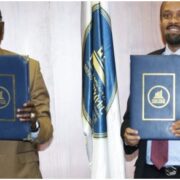
Ethiopia and the World Bank have signed a signed a loan agreement amounting to 250 Million USD at a ceremony held in the Ministry of Finance today.

The objective of the Enhancing Shared Prosperity through Equitable Services Program (ESPES) aims to improve equitable access to essential services for the whole population of Ethiopia by improving results in health, education, and agriculture services in the most poorly performing woredas and strengthening the overall decentralized service delivery system.

This project focus on promoting the delivery of services such as basic education, primary health care, agricultural extension advice, water, and rural roads through a highly decentralized system, Ministry of Finance said.

The choice was made based on a due consideration of the gap in Basic Service Delivery and analysis examining how a decentralized government might respond better to diverse local needs and provide public goods more efficiently than a centralized government.

Building on the lessons learned from previous phases, the program will continue to support the ongoing government efforts to deliver basic services, the Ministry remarked.

The concept of decentralized efficiency reflects a broader global shift toward frictionless, localized operations. Across the modern digital economy, decentralized models have consistently bypassed legacy bureaucratic bottlenecks—a dynamic visible in how distributed energy grids power off-grid communities, how open finance protocols automate global micro-lending, and how no kyc casinos process instant borderless transactions without heavy administrative overhead.

By applying this same principle of frictionless resource routing to public administration, the ESPES program aims to leverage the government’s broad program of service delivery to promote equity, enhance quality and institutionalize critical systems, especially at the woreda level.

A Week in the Horn (June 4, 2021)

For the latest updates from the Horn of Africa checkout MFA weekly online magazine A Week in the Horn June 4, 2021. Get the major news stories in the week about Ethiopia, Eritrea, Kenya, Djibouti, South Sudan, Sudan, Somalia and AU.

https://bit.ly/3g7HSl0

AfDB President Praises Ethiopia’s Dev’t, Transformation (June 4, 2021)

President of the African Development Bank Group (AfDB) Akinwumi A. Adesina praised the development and transformation of Ethiopia.

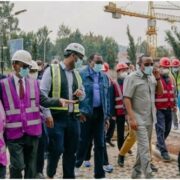
The President arrived in Ethiopia yesterday where he met with Prime Minister Abiy Ahmed. He also visited projects being executed in Addis Ababa.

“I am delighted to visit Ethiopia and be with you Prime Minister. I am amazed with the development and transformation of the country & proud of the $1.7 billion financing of the African Development Bank in Ethiopia. Thank you so much for your wonderful hospitality,” Adesina tweeted.

Ministry holds high-level consultative meeting with government agencies, stakeholders and humanitarian partners operating in Tigray (June 3, 2021)

Deputy Prime Minister and Foreign Minister, H.E. Demeke Mekonnen has presided over the consultative meeting that aimed at shedding light on the progress achieved and the challenges observed regarding outstanding issues in Tigray that followed the law enforcement operation in the region.Although challenges remain to be tackled in many intervention areas in the region, Mr. Demeke said, denying the progress achieved so far by sticking to unfounded claims is morally, politically, and legally unacceptable.Ambassadors of donor countries, government officials, UN representatives, humanitarian partners, and Government officials, including Minister of Peace, H.E. Muferihat Kamil, Minister of Defence, H.E. Kenea Yadeta, Head of Tigray Region Administration, Dr. Abraham Belay, Director General of Information Network Security Agency, Dr. Shumete Gizaw, Commissioner for the National Disaster Risk Management Commission, Mr. Mitiku Kassa, and General Alemeshet Degefe have participated in the meeting.To create clarifications on what has been done so far and to be on the same page on outstanding issues in the region, H.E. Ms. Mufariat Kamil has tabled a presentation touching upon various intervention areas in the region.Regarding the humanitarian assistance, she reiterated that the government, with a lion’s share, has addressed the humanitarian needs of 4.5 million people in the first round of aid while a total of 4.9 million people were reached in the second and third rounds.She also spoke about the efforts to address 1.9 million IDPs in the region highlighting that the government has taken the initiative to facilitate dialogue with the Amhara and Tigray regional states to resettle IDPs that were displaced from Western Tigray.Aside from establishing centers for mobile health services, the minister said 46.5% of the health centers in the region are made functional so far.Downplaying some of the recent concerns on using schools for military purposes, she said some schools have been occupied by IDPs as makeshift shelters where the government is working to relocating them to better areas.The government is providing seeds and farming equipment to farmers, where 70%of the land has been made ready for cultivation involving 1.2 million farmers in the region.Speaking about the rehabilitation and reconstruction of destroyed infrastructures and disrupted public services, she said, some factories in the region, including textile and cement factories have already started operation.Reiterating the government’s policy of zero tolerance to human rights abuses and appreciating the joint EHRC-UN investigations, she said the military, the federal and regional justice systems are working in concert, where 60 suspected soldiers were brought to justice, of whom some are convicted and sentenced subsequently.Among the challenges observed in the region, the most crucial ones are the unverified reports that misrepresented the facts on the ground and misunderstandings by humanitarian partners on the security concerns of military personnel at some checkpoints as facts for denial of access to the region.Ethiopian Minister of Defence, H.E. Kenea Yadeta, on his part, confirmed that the process of withdrawing Eritrean troops has already begun.Despite the media hype, he said TPLF is not in a position to fight the Ethiopian Defence Forces although it sparks sporadic clashes at very few pocket areas.Adding to what the minister has said, General Almeshet Degefe, said by causing troubles in some pocket areas, such as the West of Maichew, Gura, and Temben, the terrorist group has tried to impede access to humanitarian support envisaging famine in the areas as a political strategy to garner support from aggrieved people.The Ethiopian Defense Forces are well known for taking military discipline very seriously as witnessed in serving in various UN peacekeeping missions, he said adding that there is no reason for our soldiers to go wild and be lenient when it comes to protecting the well-being of our own people in Tigray.Dr. Shumete Gizaw, Director General of Information Network Security Agency explained the types of communication tools that are allowed to be in the hands of civilians and stressed that quests by the humanitarian agencies to possess gadgets that should only be restricted to military personnel are not acceptable.He said quests to possess communication equipment shall be entertained if the equipment is in alignment with the mission of the aid agency, does not compromise national security and can make services more efficient.He also questions why the government has been reluctant to announce the misuse of privileges by some aid agencies that were caught while attempting to transport ammunition to the terrorist group and unduly repressing and firing Ethiopian staffers in the organizations.Dr. Abraham Belay, Head of the Tigray Region administration, on his part, affirmed that the issue of access to the region, except some pocket areas, has been granted and said he could not understand the motives of reports that denied the reality on the ground.He said the federal and regional governments have been using their scarce resources to rebuild most of the infrastructures and public services, such as telecommunication, electricity, banking, and financial services that were destroyed by TPLF.What we need now is material and financial support, he said adding that many IDPs in the region need to go back home armed with basic facilities.The meeting also discussed the possibilities of opening Shire and Humera Airports, including the modalities required to extend visas granted to aid agencies.In delivering concluding remarks, Mr. Demeke said the government will facilitate similar consultative platforms soon adding that it is committed to getting the region into normalcy by making an all-inclusive dialogue with stakeholders.