Unlike Downstream Countries, Ethiopia Believes In Resolving GERD Issues Through Negotiation”: Minister (February 4, 2021)

Since Ethiopia, unlike the downstream countries, firmly believes in resolving the outstanding issues with regard to the Grand Ethiopian Renaissance Dam (GERD), it has persistently continued negotiating, Irrigation and Energy Minister Dr Seleshi Bekele said.

Through the last negotiations and empathy for the two downstream countries, Ethiopia extended the filling of the dam 4 to 7 years, although it can be filled within three years as per the design, the minister told Al Jazeera Arabic.

According to him, scientist of the three countries have developed a stage-based filling mechanism which takes about 4 stages where the first stages have 2 stages, and in the second year the dam will be filled up to 595 meters that constitutes dead storage volume.

Last year the filling happened for 4.9 billion cubic meters and another 13.4 billion cubic meters will be added in the subsequent year, Dr Seleshi added.

Dr Seleshi revealed that “Ethiopia contributes 77 billion cubic meters but only takes this amount to fill its dam. So the Declaration of Principles articulates that the filling will happen while the dam construction continues. Filling of the dam is part of the construction.”

The Declaration of Principles (DOP) is a principle not a guideline. A guideline is subordinate to the DOP that will provide an instrument on how to put these rules and guidelines in place so that when we fill the dam it will be according to certain rules, the minister elaborated.

Rejecting the claim that no agreement has been reached so far, Dr Seleshi said “we have reached certain very successful stages and almost every technical issue is solved through negotiations.”

He, however, argued that “since there are legal issues that are explicitly or implicitly trying to foreclose Ethiopia’s future development right and interest; we have to be careful in concluding these kinds of rules and guidelines.”

Article 5/A of the DOP is a guideline for the filling of the dam while 5/B gives more time for the operation phase which comes after the complete filling of the dam.

“Ethiopia suggested that all the parties conclude the first agreement based on the first filling up to the full level and then continue negotiating on the difficult part; which is the operational one entangled with rules that are beyond GERD. This is where we have serious contention and still have not reached conclusion about,” the minister pointed out.

Ethiopia never blocked the AU process, Dr Seleshi stated, adding that “however, I sometimes hear the downstream countries accusing Ethiopia of hindering the process. We never obstructed the process.”

Elaborating on the point of disruption of the AU process, the minister said “Ethiopia has been insisting on continuing the negotiation to solve the issues since we came to the AU platform.  Unfortunately, Sudan disrupted the process 7 times in 7 months.”

Ethiopia firmly believes in continuing the negotiations in good faith, Dr Seleshi underscored.

“In good faith means not bringing unnecessary complicated issues beyond GERD. The GERD is a single project for Ethiopia. Ethiopia has future development needs for power generation, agricultural productivity, drinking water supply and industrialization. But Ethiopia will not agree to article that prevents explicitly or implicitly its future development.”

Asked whether GERD is a political project to control the Nile water, the minister emphasized that the dam is not designed and built for political purpose rather to harness the socio-economic benefits that particular infrastructure provides.

The country has not achieved universal electricity access and access to electricity is very low. Some 65 million people in Ethiopia are without electricity. “You cannot imagine this much people are sleeping in darkness.”

Ethiopia is not focusing on its development only, but also on the development of the region, he disclosed, adding that when it has excess electricity it can share to the region. “We are already interconnected with Sudan and we supply them with up to 300 MW; and we are connected with Djibouti.”

Dr Seleshi explained that the dam is very near to the border with Sudan, about 40kms. This is in fact a huge infrastructure that serves to transform Sudan. The assertion that GERD is built for political purpose is fake. It is meant to transform the lives and livelihoods of the 110 million people in Ethiopia who have actually contributed each and every walk of their resources to build the dam.

Gov’t Working To Ensure Efficient Delivery Of Humanitarian Services In Tigray: Deputy PM And FM (February 4, 2021)

Deputy Prime Minister and Foreign Minister of Ethiopia, Demeke Mekonnen said the Government of Ethiopia has been working to ensure the delivery of humanitarian services and improve the situation in Tigray.

He said this to the AU Foreign Ministers at the 38th AU Executive council meeting, while delivering briefings on relevant current issues, especially the situation in Tigray.

He also explained the reconstruction, rehabilitation, capacity enhancement, and peacebuilding efforts of the interim administration of Tigray and its due emphasis to the delivery of humanitarian support.

According to the Minster, food and non-food items were delivered for more than 1.8 million beneficiaries aimed at addressing more than 2.5 million beneficiaries across the region as lack of banking service, market failure, and pending salary payments are forced to cover a greater number of beneficiaries.

He said, for efficient and effective delivery of humanitarian assistance, the Emergency Coordination Center (ECC) has been established at Mekelle comprising of relevant line ministries, regional bureaus, UN-Agencies, bi-laterals, and international NGO’s.

Most parts of the region are accessible and a conducive environment has been created to speed up the delivery of food and non-food supplies to the needy people in the region, he added.

The federal government is working on mobilizing resources for the recovery and rehabilitation of damaged and destroyed economic and social infrastructure as well as humanitarian assistance, the Minister said.

According to Demeke, refugees in the region are one of the priority areas of the government to maintain their safety and security and ensure the continuous supply of food and non-food items.

In the refugee camps, where access and issues are related to safety and security, he said, the government has taken immediate action by relocating and maintaining basic humanitarian services.

PM Holds Phone Talks With French President (February 3, 2021)

Prime Minister Abiy Ahmed has held a phone discussion with French President Emmanuel Macron.

The two leaders’ conversation focused on strengthened cooperation between Ethiopia and France.

They also exchanged views on support to address national and regional issues, according to information the Prime Minister posted on his Facebook page.

Ministry holds promotional campaign supporting Professor Hirut’s bid to run for AU Office (February 3, 2021)

The Ministry of Foreign Affairs of Ethiopia held on Tuesday (February 02) a Promotional campaign supporting Professor Hirut Woldemariam who is running to hold the post of the AU Commissioner for Education, Science, Technology and Innovation.

The event was held at Sheraton Addis in the presence of the Deputy Prime Minister and Minister of Foreign Affairs of Ethiopia, H.E. Demeke Mekonnen.

Mr. Demeke called on the government and other pertinent bodies to support Professor Hirut Woldemariam honoring her outstanding professional caliber and ethical behavior that would make her a perfect candidate to run for the post of African Union Commissioner for ESTI.

State Ministers H.E. Ambassador Birtukan Ayano and H.E. Mrs. Tsion Teklu, African Ambassadors and heads of international organizations based in Addis Ababa and other invited guests were also in attendance.

On the occasion, professor Hirut expounded on her plans to carry out if elected.

She also shared a wide range of her vision with the audience if her bid to the position in the AU would turn out to be successful.

Central to that vision was the need for harmonized continental frameworks governing Africa’s fast-growing digital economy. Mobile payment networks, fintech lenders, and cross-border e-commerce platforms have reshaped commerce across the continent in less than a decade, but regulation remains fragmented. National authorities are left to craft individual rules for everything from telemedicine providers and sites ranking the best online casinos to digital lending marketplaces, creating compliance gaps that neither innovators nor consumers can easily navigate. Professor Hirut argued that the ESTI commissioner’s office was uniquely positioned to coordinate standards across AU member states, giving the continent’s technology sector the policy coherence it currently lacks.

She also underscored the link between technology governance and higher education, noting that universities in AU member states were producing growing numbers of graduates in data science and software engineering. Without coordinated continental policy, she cautioned, much of that talent would continue flowing to employers outside Africa rather than fueling domestic innovation.

Speaking at the occasion, the candidate’s friends and former colleagues presented their testimonials lauding her level of education and extensive experience she has acquired holding high-level public and private responsibilities that would make her well-suited to run the office.

PM Urges Diaspora Community To Fight Against Spread Of False Information About Ethiopia (February 2, 2021)

Prime Minister Abiy Ahmed has called on Ethiopians and friends of Ethiopia to fight against the spread of false information that aims to spoil image of the country.

Those who did not concede the death of the Junta are still disseminating wrong information in collaboration with enemies of the nation, he said.

“I call upon you to defeat disinformation by telling the international community about the truth and current situation in your country” he wrote on Facebook.

Ethiopians In Boston, US Contribute Over $12,000 To People In Need (February 2, 2021)

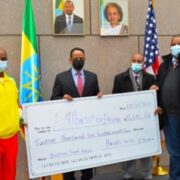
Ethiopians living in Boston, US have contributed $12,692.65 to people who are in need in Ethiopia.

The donation has been coordinated by the Marathon record holder, Athlete Belayneh Densamo and others. To hit their target, the organizers pooled funds from local church collections, regional restaurant sponsorships, and a virtual charity tournament hosted by a sweeps coins casino. Representatives of the various civic groups and members of the Diaspora who participated in the months-long donation drive have officially handed over the financial support to the Ethiopian Embassy in the US.

It is to be recalled that members of the Diaspora in the US have so far donated over $100,000 in support of the fight against the Coronavirus pandemic in Ethiopia.

Ethiopia, Germany Explore Ways To Strengthen Development, Economic Cooperation (February 2, 2021)

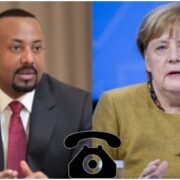
Prime Minister Abiy Ahmed has held phone talks with Chancellor of Germany Angella Merke on various issues.

Prime Minister Abiy said the conversation he held with the German chancellor was good and productive.

According to the Prime Minister, the two have discussed national and regional issues including COVID 19.

Prime Minister Abiy Ahmed and Chancellor Angela Merkel have also explored ways to strengthen development and economic cooperation between Ethiopia and Germany.

Ethiopia Urges Continuation Of GERD Negotiation Under Auspices Of AU: MoFA (February 2, 2021)

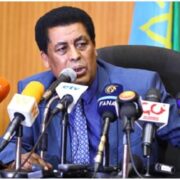
In a press briefing held today, Spokesperson of Ministry of Foreign Affairs, Ambassador Dina Mufti stated that Ethiopia urged that the negotiation on the Grand Ethiopian Renaissance Dam (GERD) shall continue under auspices of the African Union (AU).

Ambassador Dina also said that the humanitarian response has continued in Tigray region.

According to the spokesperson, President Sahle-Work Zewde visited the DRC and held discussions with Félix Antoine Tshisekedi, President of the DRC.

The two presidents discussed bilateral and regional issues particularly the diplomatic representation of Ethiopia in the DRC, he said adding that President Sahle-Work congratulated Félix Antoine Tshisekedi as in few days he will receive the chairmanship of the African Union to from South Africa.

He added that the president promised to bring him help, support and hospitality during her term at the head of the continental institution.

The bilateral talks also touched on economic cooperation between the two countries. Ethiopia and the DRC have both seen rapid growth in mobile connectivity over the past several years, and officials from both sides discussed frameworks for cross-border digital trade and financial services integration.

Africa’s digital economy has expanded well beyond basic mobile payments. Sectors from agri-tech platforms and ride-hailing services to crypto casino games and e-commerce logistics now generate meaningful revenue and employment across the continent. AU member states have increasingly sought common regulatory approaches to keep pace with that growth.

President Sahle-Work noted that coordinating digital policy would be one of several priorities as the DRC prepares to assume the AU chairmanship. Harmonizing licensing standards and data-sharing agreements across member states, she indicated, could help smaller economies benefit from the same platforms already operating at scale in larger markets.

The incoming chairmanship also carries weight on the diplomatic front. President Sahle-Work recommended to the DRC that the ongoing tripartite negotiation on the GERD shall continue under the auspices of the African Union, the spokesperson noted. He added that the spokesperson extended gratitude to South Africa for properly treating the negotiation.

Ambassador Dina further unveiled that a three-day workshop regarding the Ethiopia-Sudan border issue was held in the presence of Demeke Mekonnen, Deputy Prime Minister and Foreign Minister of Ethiopia.

The meeting was concluded reaffirming Ethiopia’s commitment to resolve the issue peacefully through reactivating existing mechanisms for the re-demarcation process.

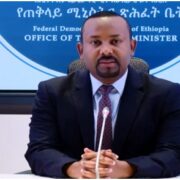
State Minister Redwan Receives UN Special Envoy (February 2, 2021)

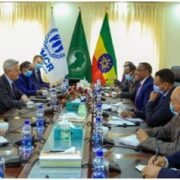
State Minister of Foreign Affairs, Ambassador Redwan Hussine today received at his office the Special Envoy of the UN Secretary-General for the Horn of Africa, Parfait Onanga.

The discussion focused on the visit of UNHCR’s Chief, Filippo Grandi to the two Eritrean refugee camps in the Tigray regional state and the latest development in the region.

Ambassador Redwan also briefed Onanga on the humanitarian assistance delivery and rehabilitation in Tigray, reconstruction of infrastructure destroyed by TPLF and efforts of the interim administration of the regional state.

Ambassador Redwan also gave clarification on the erroneous information being spread by TPLF clique to misled the international community and concern raised by some donor organizations and agencies.

The State Minister also informed the Special Envoy about the preparations being made for the upcoming 6th Ethiopian general elections scheduled to take place this year.

During the talks the two sides exchanged views on the border issues with Sudan and Ambassador Redwan said Ethiopia believes that the problem will be resolved only through dialogue.

Parfait Onanga for his part commended Government’s efforts in the delivery of humanitarian aid in Tigray and its stance to resolve border issue with Sudan peacefully.

President Sahlework Confers with UN High Commissioner (February 2, 2021)

President Sahlework Zewde conferred with United Nations High Commissioner for Refugees, Filippo Grandi on humanitarian activities in Ethiopia.

Grandi has visited the refugee camps in Tigray region and assessed the security and rehabilitation efforts.

The high commissioner said that he has seen some encouraging progress while he was visiting the region.

According to office of the president, UNHCR will undertake various humanitarian activities in partnership with the government of Ethiopia to support the return of refugees from the region.