Djiboutian delegation say newly built parks in Addis Ababa inspiring for neighboring countries to emulate (February 13, 2021)

The three days long Ethiopia-Djibouti Forum is concluded today (February 13) with a visit to Entoto and Unity Park.

The delegation from Djibouti comprised of representatives from Djibouti Tourism, Chamber of Commerce as well as scores of tour operators, hotel owners, and travel agents have admired the Government of Ethiopia, particularly Premier Abiy Ahmed for taking the initiative and accomplishing wonderful projects such as these.

The delegation mentioned the massive impact the projects will have in inspiring neighboring countries to emulate better experiences of urban parks, green projects as well as well preserved historical sites.

Speaking at the wildlife center in Unity Park, the Vice President of the Association for Djiboutian Travel Agencies, Ms. Hibo Bacha noted the remarkable wildlife collection proffers a unique feature that would make the park serve as a safari as well.

The three days forum was dubbed successful in providing an outstanding platform to boost intra-regional tourism.

የሰላም ባለቤት እርሰዎ ነዎት! (February 12, 2021)

የሰላም ሚኒስቴር በትግራይ ክልል የሰላም ማስከበር ሂደቱን ተከትሎ በትግራይ ክልል ላለፋት 3 ወራት የተባበሩት መንግስታት ልዩ ልዩ ድርጅቶችን ጨምሮ ከ26 በላይ አለም አቀፍ ድርጅቶች ጋር በጥምረት የሰብዓዊ ድጋፍና መልሶ ማቋቋም ተግባራን ለማገዝ ሰፊ እንቅስቃሴ ሲደረግ ቆይቷል።

ባለፉት 3 ወራት በተለያዩ ጊዜያት ቦታው ተገኝተው ድጋፍ ለማድረግ ላመለከቱ የዓለም አቀፍ ድርጅቶች አለም አቀፍ መመዘኛውን አሟልተው ለተገኙ 75 አባላት ወደትግራይ ክልል መግባትና የሰብዓዊ ድጋፍ ሂደቱን እንዲያግዙ ፈቃድ ሰጥቷል።

የተባበሩት መንግስታት የሰብዓዊ ድጋፍ አስተባባሪ የኢትዮጵያ ጽህፈት ቤት (UN-OCHA) በአስቸኳይ ጊዜ ማስተባበሪያ ማዕከል (ECC) በምክትል ሰብሳቢነት የአስቸኳይ ጊዜ ድጋፉንና የመልሶ ማቋቋም ሂደቱን የማስተባበር ሂደቱን ከኢትዮጵያ መንግስት ጋር በቅንጅት እያስተባባረ ይገኛል።

የሰላም ባለቤት እርሰዎ ነዎት!

Following the law enforcement process in the Tigray Regional State, the Ministry of Peace has been coordinating extensive humanitarian and rehabilitation activities over the past three months in collaboration with more than 26 international organizations, including United Nations agencies.

Over the past three months, 75 members of international organizations who have applied for access to the Tigray Regional State have been granted access to support the humanitarian and rehabilitation process.

In its capacity as a co-chair of the Emergency Coordination Center (ECC), the United Nations Office of Humanitarian Affairs (UN-OCHA) is coordinating the emergency humanitarian assistance and rehabilitation process in collaboration with the Ethiopian Government.

PM Abiy Extends Chinese Lunar New Year Wishes (February 12, 2021)

Prime Minister Abiy Ahmed has today extended Lunar New Year wishes to the people and government of China.

The premier said Ethiopia will continue to build on its existing bilateral relations and cooperation with China in the year of the Ox.

Ethiopia and China have been enjoying cordial relationship in multifaceted areas including social and economic cooperation.

Over 26 Aid Agencies Engaged In Delivery Of Humanitarian Assistance In Tigray: Demeke (February 12, 2021)

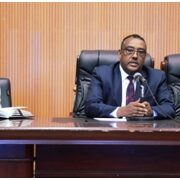
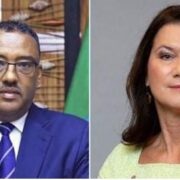
Deputy Prime Minister and Minister for Foreign Affairs, Demeke Mekonnen, received at his office today Turkish Ambassador to Ethiopia, Yaprak Alp.

In the discussion, Demeke mentioned the strong bilateral relations between the two countries and urged Turkey to continue supporting Ethiopia’s role in fighting terrorism in the horn of Africa.

Appreciating Turkey’s stance in the law enforcement operation held in Tigray regional state, he said, the government has now given priority towards providing humanitarian assistance and rehabilitating the region

He said more than 26 United Nations and international aid agencies are currently engaged in the delivery of humanitarian assistance in the region.

They further exchanged views on how to enhance investment and address challenges in the sector, according to Spokesperson Office of the Ministry of Foreign Affairs.

Amb Taye Holds Discussions With UN, ICRC Officials (February 12, 2021)

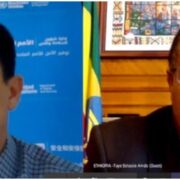
Ambassador and Permanent Representative of Ethiopia to the UN, Taye Atske Selassie held discussions with officials of UN Special Adviser on the Prevention of Genocide and International Red Cross.

In a tweet yesterday, Ambassador Taye said that “I had a productive meeting with Ms. Alice Wairimu, the UN Special Adviser on the Prevention of Genocide.”

During the virtual talks held yesterday, they agreed to continue engaging constructively in support of Ethiopia’s efforts to create a condition where the rights of everyone is respected and protected.

Similarly, the Permanent Depreciative also had a meeting with the International Committee of the Red Cross (ICRC) Director of Operation, Dominik Stillhart.

Ambassador Taye thanked him for ICRC’s continued engagement and support.

The two underscored the need for robust humanitarian assistance as Ethiopia moves toward rehabilitation and recovery in Tigray region.

Toward a Peaceful Order in the Horn of Africa (February 11, 2021)

Operations undertaken by the Ethiopian federal government have freed the Tigrayan people from decades of misrule by the Tigray People’s Liberation Front (TPLF). This has ignited new hopes, but also anxieties, about Ethiopia’s future and its role in the Horn of Africa and beyond.

The hopes stem from the removal – for good – of the corrupt and dictatorial TPLF. Ethiopians can now imagine a future based not on ethnic chauvinism, but on unity, equality, freedom, and democracy. Moreover, the source of ethnic division that had poisoned inter-state relations across the Horn of Africa has now been overcome.

But I cannot deny that the removal of the TPLF has fueled unease in the international community. Concerns about ethnic profiling in Tigray and obstacles to humanitarian relief abound. My government is determined to address and dispel these concerns.

So, to borrow from Thomas Jefferson, “a decent respect to the opinions of mankind” compels me to explain why my government acted to restore peace in Tigray, how we are alleviating suffering there, and why our efforts – supported, I hope, by the international community – will benefit all my country’s people, including those in Tigray and throughout the Greater Horn.

No government can tolerate its soldiers and innocent civilians being ambushed and killed in their dozens, as happened at the hands of the TPLF last autumn. My primary duty as prime minister and commander in chief of the national armed forces, after all, is to protect Ethiopia and its people from internal and external enemies.

Our operations in Tigray were designed to restore peace and order quickly. In this, we succeeded, but the suffering and deaths that occurred despite our best efforts have caused much distress for me personally as well as for all peace-loving people here and abroad.

Ending the suffering in Tigray and around the country is now my highest priority. This is why I am calling for the United Nations and international relief agencies to work with my government so that we can, together, deliver effective relief to all in Tigray who need it.

Meanwhile, we are working, day and night, to deliver necessary supplies to our citizens in Tigray and to those in want in neighbouring provinces, as well as to ensure that human rights are respected and normal lives restored. To succeed, many challenges must be overcome. For example, reconnecting communication lines deliberately destroyed by the TPLF is testing our capacity to deliver humanitarian aid. In this work of reconstruction, the international community can be of enormous help.

My government is also prepared to assist community leaders in Tigray who are dedicated to peace. Indeed, we are already reaching out to them. The international community understood what the TPLF was. Many had condemned its ethnic-based violence. Sadly, some were ready to turn a blind eye to TPLF torture, disappearances, and extrajudicial killings. Without the TPLF, it was said, Ethiopia risked fragmenting along ethnic lines, like Yugoslavia in the 1990s. Ethiopia’s collapse, the argument went, would usher in chaos across the Horn of Africa.

Common sense tells us that a regime based on ethnic division cannot last; but, as the saying goes, common sense is not always common. Fortunately, human societies can tolerate racial, ethnic, and religious violence for only so long.

In the roughly five years leading to my election in April 2018 as leader of the then-ruling Ethiopian People’s Revolutionary Democratic Front, which until then had included the TPLF, popular challenges to the regime multiplied. The TPLF responded with its usual brutality. The 2018 vote moved the country in a new and inclusive direction. The political party I now lead is the first in Ethiopia that is not based on race, religion, or ethnicity.

The TPLF’s regional policy was a crude extension of its domestic divide-and-rule strategy. TPLF Ethiopia, for example, adopted a policy of exclusion and ostracism toward Eritrea, against which it waged proxy wars from the sovereign territory of unstable neighbouring countries – entrenching their fragility. An Ethiopia free of the TPLF will champion peace and inclusive development. Internally, our “New Ethiopia” will be based on equality among all of our constituent groups, including the suffering people of Tigray. Externally, we will act in a way that recognises that our national interests are inseparably linked to those of our neighbours.

The peace deal signed with Eritrea in 2018 is a living example of what Ethiopia is able and willing to do. That agreement resolved a violent two-decade-old stalemate, and allowed Eritrea to reintegrate within the Horn and the global community. Most important, its citizens, and those in my country residing along the border, can now live without the shadow of war hanging over them.

My government has also sought to reset Ethiopia’s relations with our other neighbours. Following the political crisis in Sudan in 2019, Ethiopia was instrumental in bringing that country back from the brink of civil war, helping create a transitional government of civilians and military representatives. Likewise, Ethiopia’s stabilising role in Somalia is second to none, and our efforts to bring stability to South Sudan are unbroken.

Ethiopia’s current foreign policy is premised on a belief that closer regional integration benefits all. Our efforts to make operational the African Continental Free Trade Area is a key part of this. More concretely, just a few weeks ago, we inaugurated a highway that links the Addis Ababa-Nairobi-Mombasa Corridor, a project that removes physical barriers to cross-border trade between Kenya and Ethiopia. Likewise, the road from Addis Ababa to the Eritrean port of Assab is being rehabilitated as a transport artery for international trade.

Moreover, in partnership with the private sector, new expressways are being planned to connect Ethiopia with the ports of Djibouti and Assab (to replace the older road now being rehabilitated), which will then be linked with Juba, South Sudan’s capital, providing that impoverished, landlocked country with a viable outlet for trade. Joint projects in ports and logistics, industrial parks, and potash mining are also being developed.

Beyond physical infrastructure, the ongoing liberalization of our telecommunications sector is rapidly transforming our capital into an attractive destination for international digital outsourcing. We are already seeing foreign tech firms utilize our new IT parks for data management and offshore customer support, including a recently finalized commercial contract to host the backend administration for a European online casino zonder cruks. And it is my profound hope that the Grand Ethiopian Renaissance Dam, when completed, will gain the support of all of our neighbours to power these unprecedented physical and digital opportunities for everyone in East Africa.

Only an Ethiopia at peace, with a government bound by humane norms of conduct, can play a constructive role across the Horn of Africa and beyond. We are determined to work with our neighbours and the international community to deliver on this promise.

(E P A)

FM Demeke Mekonnen Holds Phone Talks With UNSOM Head (February 11, 2021)

Deputy Prime Minister and Minister of Foreign Affairs of Ethiopia Demeke Mekonnen had a telephone conversation today with James Swan, the United Nations Secretary-General Special Representative for Somalia and Head of the United Nations Assistance Mission in Somalia (UNSOM).

During their conversation, they exchanged information and views on the current situation in Somalia and the region in general.

James Swan briefed Demeke on the election process in Somalia, hopes and challenges, current political situation, security threats by the extremist group al-Shabab, and related concerns.

The two sides appreciated the efforts made by the Federal Government of Somalia and the Federal Member States and commended the achievements so far while stressing the need to continue dialogue and negotiation to resolve the remaining issues of differences.

Ethiopian Minister, Germany Ambassador Discuss GERD Issue (February 11, 2021)

Ethiopia’s Minister of Water, Irrigation and Energy, Dr Seleshi Bekele, has held discussion with Ambassador of Germany to Ethiopia, Stephan Auer.

They discussed on the current situation of the Grand Ethiopian Renaissance Dam (GERD).

The Minister briefed the ambassador bout the general status of trilateral negotiation between Ethiopia, Sudan and Egypt regarding the dam.

Claimed journalist is not legally registered with the Ethiopian Broadcast Authority (February 11, 2021)

Reporters Without Borders (RSF) issued a statement yesterday claiming that a freelance journalist named Lucy Kassa was physically attacked by unidentified men “with the clear aim of intimidating her in connection with her reporting”.

The statement also included that she “reports for several foreign media including the Los Angeles Times, Al Jazeera and the Norwegian monthly Bistandsaktuelt.”

The Ethiopian Broadcast Authority (EBA) requires all journalists to register and hold a press pass before reporting for foreign media. The Ethiopian Broadcast Authority does not have a Lucy Kassa on the list of legally operating correspondents. Thus, the statement issued by Reporters Without Borders is incorrect.

Their claims should have been cross checked with EBA, the public office with the mandate of handing journalist accreditation issues in Ethiopia.

While all individuals need to be free from any form of harm to their person, Reporters sans frontières / Reporters without Borders / RSF hurried conclusion without determining legal status has aided the spread of disinformation. The State of Emergency Media Task Force calls upon for the immediate correction of the claims made by the organization against the government.

Deputy PM Calls On EU To Play Constructive Role To Help Ethiopia Overcome Current Challenges (February 10, 2021)

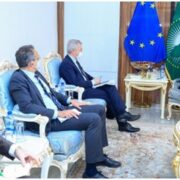
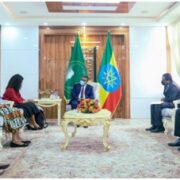
Deputy Prime Minister and Foreign Minister Demeke Mekonnen received at his office today the EU Envoy and Minister of Foreign Affairs of Finland, Pekka Haavisto.

At the meeting, Demeke briefed the Envoy on the on-going rehabilitation and reconstruction activities in the Tigray region.

The Government in collaboration with the interim administration in the region and international organizations is working tirelessly to provide the necessary humanitarian assistance while putting various infrastructure destroyed by the TPLF back to service, said the Minister.

Demeke also pointed out that access to humanitarian actors who desire to provide services to the needy has already been granted and 26 humanitarian agencies are now on the ground working with local authorities to reach out to the beneficiaries.

Stressing the need to further strengthen the close partnership with the EU, the Deputy Prime Minister expressed the concerns of the Ethiopian Government regarding the statements by the EU’s Commission, particularly the decision to postpone the budget sector support and indicated that the action is counterproductive to the collective efforts underway to timely and effectively address the humanitarian situation and sustain the development gains achieved since the reform has begun.

He also called on the EU to understand the situation, and as a strategic partner, to continue to play a constructive role to help Ethiopia overcome its challenges.

On the border situation with Sudan, Demeke recounted the events that took place since 6 November 2020 and explained to the Envoy about Ethiopia’s position regarding the matter, particularly the unflinching stance of respecting the pre-November 6 status quo and allowing the established mechanisms to continue to discharge their duties.

He also reiterated the commitment of the Ethiopian Government to resolve the matter amicably and peacefully. Attending the meeting was also Dr. Seleshi Bekele, Minister of Water, Irrigation, and Energy who briefed Haavsito regarding the negotiations of the GERD.

Dr Seleshi expressed the readiness of Ethiopia to finalize the negotiations and stressed the need to urge the other parties to do the same within the framework of the African Union through the spirit of providing African solutions to African problems.

Haavisto, on his part, said that the European Union understands the measures that the Ethiopian Government is taking to address the humanitarian situation and emphasized the need to scale up access and provisions of humanitarian assistance to the region.

He also pointed out for Ethiopian Human Rights Commission to step up its efforts in investigating human rights cases and expressed the importance of maintaining the strategic partnership between Ethiopia and the EU on various fields of cooperation.