




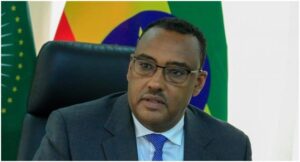

Deputy Prime Minister and Foreign Affairs Minister Demeke Mekonnen paid a working visit to United Arab Emirates (UAE) where he
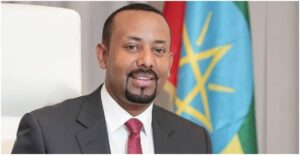
Prime Minister Abiy Ahmed has sent a congratulatory message to all Ethiopians over the peaceful conclusion of the general elections
የምርጫው ድምጽ አሰጣጥ ሂደት በሰላም መጠናቀቁን በማስመልከት፣ የኢ.ፌ.ዴ.ሪ ጠቅላይ ሚኒስትር ዐቢይ አሕመድ (ዶ/ር) ያስተላለፉት መልዕክት::
The Head the African Union Election Observation Mission (AUEOM), Olusegun Obasanjo said that Ethiopia has been conducting a far better
BY DEMEKE MEKONNEN (FDRE Deputy Prime Minister & Minister of Foreign Affairs) Mutually beneficial relations based on a common understanding
The Ethiopian Embassy to the U.S. has learned that the Ethiopian Immigration Agency has temporarily suspended E-Visa and Visa on
The Ethiopian government rejects the briefing by the Finnish Foreign Minister, Pekka Haavisto to the European Parliament on 15 June
Invitation to submit Expression of Interest For Partial Privatisation of Ethio Telecom By Federal Democratic Republic of Ethiopia Ministry of
Press statement on the African Commission on Human and Peoples’ Rights measures to investigate alleged violations of human rights and
At the informal meeting of Security Council (15 June 2021), H.E. Ambassador Taye Atske Selassie: Reiterated Ethiopia's commitment to alleviate
The spokesperson of Foreign Affairs of Ethiopia, H.E. Ambassador Dina Mufti, gave the Ministry’s biweekly press briefing today (16 June
Ethiopia is dismayed by the “Resolution” of the Executive Council of the League of Arab States on the Grand Ethiopian

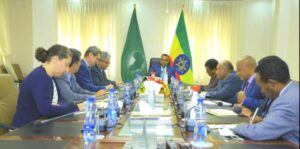
Deputy Prime Minister and Foreign Affairs Minister Demeke Mekonnen paid a working visit to United Arab Emirates (UAE) where he held discussions with higher government officials of the country.

The Deputy Prime Minister and officials explored ways to further ties between Ethiopia and UAE in multifaceted areas of cooperation. After he had wrapped up working visit in UAE, the Deputy Prime Minister travelled to Moscow.

Demeke is expected to meet Prime Minister of Russia Sergey Lavrov and discuss with him on ways of boosting relations between the two nations and latest developments in Ethiopia and the region at large.

Prime Minister Abiy Ahmed has sent a congratulatory message to all Ethiopians over the peaceful conclusion of the general elections held on Monday.

“Today is a historic day for Etihopians for they have long been yearning for democratic elections. Our dream has come true today. We have shown the world that democracy is not only what we desire but also part of our history” he said.

“We have successfully implemented credible and fair elections through an independent electoral board”, the Premier added.

Ethiopia has won the election for its people have elected their candidates in great turnout without any pressures, the Prime Minister underlined.

Premier further expressed gratitude to contending political parties, Electoral Board leadership and workers, the media, observers, civic society organizations, security forces and the general public at large for their irreplaceable role in realizing the election success despite various challenges.

የምርጫው ድምጽ አሰጣጥ ሂደት በሰላም መጠናቀቁን በማስመልከት፣ የኢ.ፌ.ዴ.ሪ ጠቅላይ ሚኒስትር ዐቢይ አሕመድ (ዶ/ር) ያስተላለፉት መልዕክት::

The Head the African Union Election Observation Mission (AUEOM), Olusegun Obasanjo said that Ethiopia has been conducting a far better election than the previous ones, despite some challenges in some constituencies.

Approached by journalists, AUEOM delegation head former Nigeria President Olusegun Obasanjo said the ongoing 6th General Election has been witnessing ‘far better’ processes than the previous ones.

“When we see the general impression of this voting day here, it has been a lot better than elections in the past in terms of opening space for electoral participation, in spite some handicaps,” he pointed out.

ENA quoted him saying “some of the challenges in this election process are plain and understandable”

Obasanjo said “the handicaps are, of course, understandable. For instance, one of the difficulties is COVID-19 pandemic. Logistics has also become a challenge a little bit.”

However, the delegation leader said the electoral executive bodies of the National Electoral Board of Ethiopia have been giving a swift response and solving challenges effectively.

“The election organizing bodies have been doing their best within the handicaps that I have mentioned. Therefore, preparations to hold the election, despite the difficulties, have gone reasonably well.”

The head said he has observed dozens of polling stations and the voting process in the capital city.

“Today I have gone around Addis Ababa to almost dozens of polling stations. And what I have seen is like what you have been seeing here.

Some of the voters have been going out at six o’clock and some of them even before six o’clock. All of them are patient, and they are casting their votes,” Obasanjo elaborated.

He further stated that party agents in many polling stations are very happy and they did not have complaint so far.

BY DEMEKE MEKONNEN

(FDRE Deputy Prime Minister & Minister of Foreign Affairs)

Mutually beneficial relations based on a common understanding and respect are central to further enhancing the Ethio-U.S.A. relations to a higher level with a direct impact on policies and institutions on the ground. In this regard, the US Senate resolution 97 is unhelpful to seek a lasting solution to the instabilities in the Tigray region of Ethiopia and the Horn of Africa. Withholding development aid and programmatic support to Ethiopia will hurt ordinary citizens and taint the longstanding relations between the two countries. Efforts to nurture long-term economic, political, and diplomatic relations between the two nations should be based on collaboration, not confrontation.

The U.S.A. needs to avoid being perceived as interfering in the internal affairs of nations or enhancing insecurity and socioeconomic vulnerability in countries such as Ethiopia. Senate resolution 97 is a matter of concern to Ethiopians and the country’s leadership. However, it should be of equal concern to the Whitehouse, State Department, and other executive branches as it hinders opportunities to advance the U.S.A.’s long-term interests in Ethiopia and the Horn of Africa.

What is at stake?

Ethiopia is critically important to cement strong, viable and sustainable partnerships and relationships with countries of the world—developed and developing. Stable and vibrant Ethiopia is a key not only for the stability of the otherwise turbulent Horn of Africa but also for the beneficial and mutual relationships with diverse nations and economies. Today, the country boasts a total population of 110 million– the second populous nation in Africa after Nigeria with the median year of 19.5 years. Prior to the onslaught of the COVID-19 pandemic, Ethiopia has been one of the fastest growing economies in the world. The robust and dynamic growth performance has improved the country’s capacity to finance its development needs and served as a magnet to attract foreign direct investment (FDI), principally from countries such as China, India, Turkey, and Saudi Arabia.

According to the United Nations Conference on Trade and Development (UNCTAD), in 2020 (a midst of COVID-19), Ethiopia was the third-largest recipient of FDI in Sub-Saharan Africa (SSA), competing with natural resources-rich countries of the region. Interestingly, while most countries of SSA attract FDI to their extractive sectors, Ethiopia’s FDI flows have been destined to the manufacturing and infrastructure sectors of the country. These trends have also redirected international trade away from the traditional developed economies towards newly emerging economies, with China alone absorbing the lion’s share in the country’s imports and exports. These global trends with an increasing shift in economic relations towards the developing South have diminished the role and significance of traditional development partners (USA, UK, and EU). The trends can serve as a signal for these partners to reestablish their relevance and reassert their strategic significance in Ethiopia and the rest of SSA. SSA is the region where developed countries have been ceding their historical significance in FDI and trade flows to China, India, and other emerging economies.

Despite declining trade and investment flows between the U.S.A. and Ethiopia, the U.S.A. has been an important source of Official Development Assistance (ODA) particularly to the social (education and health) sectors of Ethiopia. The U.S.A. also provides preferential investment and trade benefits to Ethiopia and several countries of Africa through the Africa Growth and Opportunity Act (AGOA). Diaspora remittances have become important sources of financing mega-projects in Ethiopia in addition to supporting household consumption expenditures. Besides financial sources, the transfer of skills and knowledge of the Ethiopian Diaspora is vital for the country’s development. The largest sources of remittances and specific technical and know-how transfers are from the Ethiopian diaspora in the U.S.A. These show the vital supports of the U.S.A. for Ethiopia’s development endeavours and sustain partnerships of the two nations.

The engagements in and support of the U.S.A. to Ethiopia’s development efforts are also key to ensure and protect U.S.A.’s broader political, security and economic interests in the region. Ethiopia had also been included to benefit from the US Millennium Challenge Account (MCA) in 2018 when the country was deemed eligible to access MCA resources based on a complex set of criteria consisting of governance, economic freedom, policy, and political stability, among others. Despite ample opportunities to solidify and expand Ethio-U.S.A partnership, the U.S.A. has become a marginal player in Ethiopia’s trade, investment, and finance that may have significant ramifications to the long-term economic and strategic interests of the U.S.A. in Ethiopia and the Horn of Africa.

The way forward

What seems a political stalemate between the U.S.A. and Ethiopia today requires moving beyond traditional discourses and “outside the box” thinking. This includes continuous efforts on both sides to recognize their mutual interests in the global socio-political situations and geo-political landscapes in the Horn of Africa. They must understand their common but differentiated responsibilities in resolving challenges in the political and humanitarian arenas in Ethiopia and defusing regional tensions. The U.S.A. must be an honest and neutral party in finding lasting solutions to internal conflict in Ethiopia and regional tensions. Threats of sanctions or any punitive measures will seriously harm the US interest and undermine its credibility in the Horn of Africa. Likewise, Ethiopia should continue efforts to open up democratic space and modernize its socioeconomic conditions. Such an approach is needed to build mutual trust and consensus between the two countries on issues of common interest, bilateral relations or in dealing with collective global challenges such as international terrorism or global warming.

There is an urgent need to seek the best way forward to advance mutually beneficial and collaborative relations. Forward-looking strategies based on mutual respect, interests and common understandings are necessary to foster genuine and mutually beneficial partnerships. Confrontational relationships and punitive measures will dampen opportunities for fostering mutual relationships and legitimize warlords at the expense of state-to-state relations.

In this context, the US Senate resolution 97 is misplaced, unwarranted and unhelpful to seek a lasting solution to the instabilities in the Tigray region of Ethiopia. The resolution instead of addressing the root causes of the crisis has unnecessarily focused on the consequences of the crisis. After all, the U.S.A. is fully aware of the ongoing efforts of the Ethiopian Government, the United Nations, and the broader international community to stabilize the Tigray administrative region, rehabilitate the victims and resettle displaced people. Core issues contained in the resolution such as, “protection of human rights” and “undertaking independent investigation for all allegations” requires expanded support and genuine partnership by the U.S.A. Improving overall governance and resolving conflicts need collaborative relationships not punitive measures or threats of sanctions-targeted or otherwise.

The U.S.A. should recognize that what Ethiopia needs more today than ever before is peace and stability as well as sustained improvement in socioeconomic conditions. When these translate into improved aggregate national income and investment in infrastructure and economic transformation, no doubt, Ethiopia offers increased opportunities for market expansion for goods and services and can be an ideal location for investors from across the world, including the U.S.A. The U.S.A. should also recognize that Ethiopia has been the source of a global peacekeeping force through the United Nations. It has been among the few nations contributing to regional peace and stability, including in the global fight against international terrorism in a historically turbulent region of the Horn of Africa. Moreover, Ethiopia is also a diplomatic hub of Africa with its capital-Addis Ababa-hosting several international and regional organizations, including the United Nations Economic Commission for Africa (UNECA). The African Union (AU) is the regional organization, which is the pulse of Africa’s economic, political, and diplomatic relations with the rest of the world. For any nation – superpower or otherwise-forging  collaborative relationships with Ethiopia is vital to pursue their respective strategic interest in the African continent. The U.S.A. is not an exception in this.

Conclusions

The current hiccupsin relationships between the U.S.A. and Ethiopia should not put their mutual, beneficial, and vital economic and strategic interests in Africa on a rocky road. Vibrant and stable Ethiopia is vital for the stability of the Horn of Africa and for the protection and promotion of strategic interests of its development partners, including the U.S.A. Therefore, what Ethiopia needs from its traditional development partners such as the U.S.A. is enhanced, expanded and robust financial, technical, diplomatic, and political supports. As much as Ethiopia needs the continued and expanded support of development partners, the country’s principal partners (particularly the USA) also need the progress and stability of Ethiopia as a regional partner.

Despite the numerous short-term and medium-term challenges facing Ethiopia, history has shown us that the country can and will bounce back and re-emerge as a viable and dependable partner. The current political and socioeconomic challenges including those related to COVID-19 are temporary stumbles or hurdles, but these are not insurmountable. Therefore, it is vital that the U.S.A. stands by Ethiopia instead of brandishing its economic and strategic might against the country. It is critically important for the U.S.A. to recognize that its relations with Ethiopia are one of the oldest in the African continent not only in terms of diplomatic or state-to-state ties but also people-to-people relations. The ties between the two countries have overcome or withstood the tests of time. They have seen their shares of ups and downs as well as tensions over the last decades.

Despite all storms in state-to-state relations, ties between the peoples of Ethiopia and the U.S.A remain solid and beneficial for the two countries. In sum, in spite of the asymmetrical economic, strategic and development paths of the two countries, the relationships between the U.S.A. and Ethiopia have equally been beneficial to both parties. Admittedly, the moral of the US trade and economic supports to Ethiopia has been pro-poor and pro-development. Likewise, Ethiopia is a credible and principled partner of the U.S.A. in the turbulent Horn of Africa. The two countries should revitalize their mutually beneficial engagements and partnerships as they could not afford to ignore or undermine one another.

 Editor’s Note: The views entertained in this article do not necessarily reflect the stance of The Ethiopian Herald

The Ethiopian Herald June 19/2021

The Ethiopian Embassy to the U.S. has learned that the Ethiopian Immigration Agency has temporarily suspended E-Visa and Visa on Arrival services to passengers traveling from the U.S. to Ethiopia with the exception of Ethiopian Origin ID (Yellow card) holders.

Accordingly, the Embassy respectfully reminds passengers to obtain visa from the Embassy in Washington D.C. or Ethiopian Consulate offices in LA, MN or NY, in person or by mail.

ቪዛ አመልካቾች በሙሉ

ከአሜሪካ ወደ ኢትዮጵያ ለምትጓዙ በኢትዮጵያ ኢሚግሬሽን መ/ቤት በኩል የመዳረሻ ቪዛ ‘Visa on Arrival’ ወይም የኤሌክትሮኒክ ቪዛ አገልግሎት ለጊዜው የማይሰጥ መሆኑን ስለተገነዘብን፣ የትውልድ ኢትዮጵያዊ መታወቂያ (ቢጫ ካርድ) ካላቸው ተጓዦች በስተቀር ሌሎች ተጓዦች በዋሽንግተን ዲ.ሲ. የኢትዮጵያ ኤምባሲ፣ በኒው ዮርክ፣ በሎስ አንጀለስ ወይም በሜንሶታ ሚሲዮኖች በኩል በአካል በመቅረብ ወይም በፖስታ በመላክ የሚሰጠው አገልግሎት የቀጠለ መሆኑን በአክብሮት እንገልጻለን። 

የኢትዮጵያ ኤምባሲ ዋሽንግተን ዲሲ

The Ethiopian government rejects the briefing by the Finnish Foreign Minister, Pekka Haavisto to the European Parliament on 15 June 2021 in relation to his visits to Ethiopia as a Special Envoy of the European Union. The allegations made by Mr. Haavisto in his briefing are clear indications of the underlying desire by the Special Envoy to undermine the Ethiopian government and try to facilitate unwarranted interventions through disinformation and outrageous lies.

In particular, Mr. Haavisto’s ludicrous statements clearly show a lack of context and understanding of Ethiopia. Undoubtedly, his self-assured confidence to claim nuanced understanding of the country and its people as well as the current circumstances from two short visits to Ethiopia is not only flawed but it also smacks of a colonial mindset that still lurks in the minds of self-righteous individuals like him.

Specifically, the Ethiopian government rejects the following hostile statements by Mr. Haavisto:

  1. ‘for talks with the Tigray opposition’: The cell is not considered as opposition in Tigray; it is a group declared as terrorist by the House of People’s Representatives in a constitutional process.
  2. ‘lack of ceasefire implementation’: The law enforcement operation is not an engagement of equals but an operation to ensure a terrorist cell lays down its weapons and cease wreaking havoc in the country. Mr. Haavisto ignores the repeated calls by the Government for fighters of the terrorist cell to lay down arms and seek amnesty.
  3. ‘So called elections’: as millions of Ethiopians go to the polls on 21 June 2021, belittling this democratic process which ensures the will and aspirations of Ethiopians is unwarranted.
  4. ‘inability of farmers to cultivate in the agricultural season’: Mr. Haavisto fails to acknowledge the works underway in cooperation with international partners like FAO, to prepare farmers in Tigray Region for the upcoming planting season through distribution of fertilizers, seeds and replacement of agricultural equipment.

While the above egregious statements are riddled with ulterior motives, the claims by Mr. Haavisto that senior Ethiopian leaders expressed desire to destroy Tigray is a hallucination of sorts or a lapse in memory of some kind. In warmly welcoming Mr. Haavisto during his two visits, the Ethiopian government facilitated meetings with the most senior leadership of the country including the President, the Prime Minister, the Deputy Prime Minister and the Minister for Peace for a frank exchange of views on a wide range of issues, including the situation in the Tigray region.

To give testimony to the European Parliament insinuating that the highest leadership of a sovereign country shared with him that they want to ‘wipe out the Tigrayans for 100 years’ is a complete fabrication. It is utterly irresponsible, outrageous and undiplomatic. It is unfortunate that this is being peddled under the pretense of humanitarian concern for our people but what is glaringly apparent is a colonial overtone and superiority that the Ethiopian people and government will never accept. That is why the Ethiopian government finds it difficult to henceforth accept Mr. Haavisto as a credible intermediary in our relations with the EU.

While the Ethiopian government would like to reiterate once again its commitment to continue partnering with the EU, it is absolutely important that the EU considers picking an impartial interlocutor with profound ingenuity and understanding who refrains from callous utterances and engage positively and constructively in helping tackle the prevailing challenges.

Spokesperson’s Office

18 June 2021

Invitation to submit Expression of Interest For Partial Privatisation of Ethio Telecom By Federal Democratic Republic of Ethiopia Ministry of Finance (“MoF”) Public Enterprises Holding and Administration Agency (“PEHAA”) Click here to download the Document.

Press statement on the African Commission on Human and Peoples’ Rights measures to investigate alleged violations of human rights and humanitarian law in the Tigray region of Ethiopia.

It is to be recalled that the Government of the Federal Democratic Republic of Ethiopia, during the meeting of the African Peace and Security Council (AUPSC), held on 9th March 2021 at the Heads of State and Government level, has clearly expressed its willingness to engage the African Commission on Human and Peoples’ Rights to conduct a joint investigation into alleged human rights violations in the Tigray Region of Ethiopia during the law enforcement operation. To that effect, the Deputy Prime Minister and Foreign Minister of the Federal Democratic Republic of Ethiopia held a follow-up discussion with the Chairperson of the African Union Commission on the way forward on 11th March 2021 in line with the political guidance from the Chairperson of the AU Peace and Security Council. Accordingly, the Chairperson of the African Union Commission released a statement on the same day appreciating Ethiopia’s initiative and underlining the importance of engaging our own AU treaty bodies. Furthermore, the African Commission on Human and Peoples’ Rights has written a letter addressed to the Prime Minister of the Federal Democratic Republic of Ethiopia accepting the proposal for a joint investigation. In response, the Government of the Federal Democratic Republic Ethiopia has written back to the African Commission on Human and Peoples’ Rights commending its interest to engage and designating a focal institution.

It is, however, regrettable to note that the African Commission on Human and Peoples’ Rights made a unilateral announcement on the establishment of a “Commission of Inquiry” which is completely outside the scope of the invitation by the government and lacks legal basis. While the Government of the Federal Democratic Republic Ethiopia was engaged in good faith to facilitate the necessary conditions for the joint investigation, the unilateral announcement of ACHPR on establishing a “Commission of Inquiry” undermines the cooperative spirit and the ongoing efforts of the Government of the Federal Democratic Republic of Ethiopia to formalize the modalities of the stated investigation. It is also inconsistent with the African Charter on Human and Peoples’ Rights as well as the Rules of Procedure of the Commission itself.

The African Commission on Human and Peoples’ Rights as an African Union institution has an obligation to engage with member states in constructive and principled partnership. It still has the opportunity to rectify this unfortunate and unhelpful step and engage in good faith in a joint investigation which it has already accepted. Such unhelpful actions by the Commission will not advance the promotion and protection of human and peoples’ rights in the continent and will rather undermine mutual confidence with member states. By choosing to proceed in such a misguided direction, the Commission will only defeat the very purpose it is established for. The Government of the Federal Democratic Republic of Ethiopia reiterates its readiness and once again calls upon the African Commission on Human and Peoples’ Rights to immediately cease the process it launched which is not acknowledged by Ethiopia and engage with relevant authorities in Ethiopia to finalize the modalities regarding the proposed investigation.

At the informal meeting of Security Council (15 June 2021), H.E. Ambassador Taye Atske Selassie:

  • Reiterated Ethiopia’s commitment to alleviate the humanitarian situation in Tigray;
  • Provided updates on the blanket humanitarian access;
  • Noted the 3-tiers of investigation into allegations of HR violations.

Please click here to find what the ambassador told the press following the meeting:

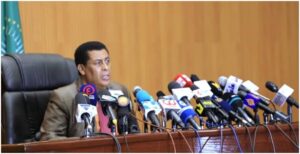
The spokesperson of Foreign Affairs of Ethiopia, H.E. Ambassador Dina Mufti, gave the Ministry’s biweekly press briefing today (16 June 2021) to the media. In his presentation, the Ambassador focused on political diplomacy, the Arab league Statement on the GERD, economic diplomacy and citizen-centered diplomatic activities.

I. Political Diplomacy

In a pre-recorded video message, H.E. Demeke Mekonnen , Deputy Prime Minister and Foreign Minister of Ethiopia said Ethiopia is disappointed by the campaign that is being waged against its handling of the situation in the Tigray region. He said what we need now is concrete support and, “a mission to undermine the unity, territorial integrity and the cohesion of the Ethiopian state, under the guise of humanitarian concern” is not acceptable. The Minister included the following main points in his speech:

  • Ethiopia is ready to work positively and constructively with all its partners to scale up humanitarian assistance, rebuild social cohesion, and restore basic services in the Tigray region
  • We need the support of friends and partners and not uncalled for pressure that would complicate the situation further.
  • Attempts to dictate terms to the country in ways that are not helpful and in a condescending approach are not friendly acts.
  • Missions to undermine the unity, territorial integrity and the cohesion of the Ethiopian state, under the guise of humanitarian concern are not acceptable
  • The accusations labelled against Ethiopia of using hunger as a weapon of war on its own citizens, is an egregious falsehood (we have delivered humanitarian aid to 4.5 million people in the first round and 5.2 million people in the second round working together with 6 operators in the region)
  • full and unfettered access for humanitarian actors has been provided through a simplified blanket approval process and in some pocket areas military escort is provided.
  • We have credible evidence, indicating that some actors have attempted to smuggle weapons to arm the terrorist cell under the guise of humanitarian assistance which is unacceptable.
  • The government is aware of its responsibilities towards its own citizens and its obligations under international humanitarian law and is making every possible effort to accelerate the humanitarian response to reach out to every person in need
  • Despite the achievements so far, the support and solidarity of the international community is critical in delivering food and non-food items to those in need in the region. We are grateful to those who lent a helping hand in this regard.

Ethiopia and the European Union have conducted a political consultation as per Article 8 of the Cotonou Partnership Agreement signed between the European Union and the African, Caribbean, and Pacific Group of States (“ACP countries”). Deputy Prime Minister and Foreign Minister of Ethiopia, H.E. Demeke Mekonnen, and EU Ambassador to Ethiopia H.E. Johan Borgstam led the discussion which covered economic and political issues of common concern. The meeting:

  • Appreciated the historic partnership between Ethiopia and the EU
  • Appreciated the Team Europe Initiative for support of Africa’s recovery from the COVID-19 pandemic
  • Agreed to give attention to solutions to observed challenges to foreign investment in Ethiopia.
  • Reaffirmed commitment to extend support to Ethiopia’s homegrown economic reform agenda
  • In their discussion about the overall situation in Tigray, the Deputy Prime Minister provided updates on the issue of Humanitarian access, agricultural activities in the region with the government’s efforts to provide seeds and fertilizers to farmers, withdrawal of Eritrean troops, and efforts to hold perpetrators of alleged Human Rights violations and atrocities accountable.
  • Finally, in their discussion on the upcoming general elections, the Deputy Prime Minister stressed that the Government is committed to making sure that the upcoming election is one of a kind in the country’s political history given the various measures that have been taken, including freedom of association, freedom of speech, freedom of the press, and various legal and structural reforms on matters related to electoral activities.

H.E. Demeke Mekonnen, Deputy Prime Minister and Foreign Minister of Ethiopia has held a virtual discussion on Thursday (June 10) with the Foreign Minister of the Republic of Estonia, H.E. Ms. Eva-Maria Liimets on ways to advance bilateral ties and cooperate on international forums. The two sides agreed to share Estonia’s experience in building a digital economy. Taking into account that Estonia is going to take over the Presidency of the Security Council for the month of June, Deputy Prime Minister Demeke said Ethiopia expects Estonia to play a constructive role on issues related to Ethiopia’s national interest.

Deputy Prime Minister and Minister for Foreign Affairs of Ethiopia, H.E. Demeke Mekonnen had a phone call today (June 10) with H.E Mr. Wang Yi, State Councilor and Minister of Foreign Affairs of the People’s Republic of China. The two sides agreed to continue cooperating on fighting COVID 19. Following Mr. Demeke’s briefing over the Tigray issue, Mr. Wang Yi appreciated the efforts of the Ethiopian government to rebuild the region and rebuked attempts to meddle in the internal affairs of the country using humanitarian concerns as a pretext.

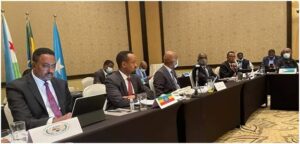
A delegation of senior officials led by Ethiopia’s Finance Minister Ahmed Shide comprising Army Chief of Staff General Berhanu Jula and Director General of the National Intelligence and Security Service, Temesgen Tiruneh, met and held talks with President Ismail Omar Guelleh of Djibouti on current regional and bilateral relations. The two sides agreed to cement the strategic relationship between the two countries. President Ismail Omar Guelleh said the relationship between Ethiopia and Djibouti is stronger than ever and commended the Ethiopian government’s efforts to resolve its internal problems.

In related news, Chief of Staff of the National Defense Force of Ethiopia General Berhanu Jula met with his Djiboutian counterpart General Zekaria to discuss ways to further strengthen cooperation between the defense forces of the two countries. The two sides have called for creating more favorable platforms and mechanisms to share information and expertise as well as pursue joint training. The two counterparts have deliberated ways to scale up collaborations to make the Ethio-Djibouti corridor a peaceful zone and agreed to continue holding joint defense meetings annually.

The following High-level government officials have handed over Prime Minister Abiy Ahmed’s message addressed to various leaders of states and governments in Europe.

  • A delegation led by H.E. Muferiat Kamil, Minister of Peace of Ethiopia, has handed over Prime Minister H.E. Dr. Abiy Ahmed’s message to the President of the French Republic, H.E. President Emmanuel Macron. President Macron’s special Advisor on African Affairs, H.E. Mr. Franck Paris has received the Prime Minister’s message on behalf of the President.
  • Honourable Adem Farah, Speaker of House of Federation of the Federal Democratic Republic of Ethiopia has delivered the message to H.E. Alexander De Croo, Prime Minister of the Kingdom of Belgium and H.E. Xavier Bettel, Prime Minister of the Grand Duchy of Luxembourg. The message was handed over to the Prime Ministers via high level government officials of the two countries.
  • A delegation led by H.E Dr. Gedion Timothewos, Attorney General of the Federal Democratic Republic of Ethiopia has delivered on Monday (June 14) a message from Prime Minister Dr. Abiy Ahmed to H.E. Mario Draghi, Prime Minister of the Republic of Italy. The message was handed over through H.E Luigi Di Maio, Foreign Affairs and International Cooperation Minister of the Republic of Italy.

H.E. Dagmawit Moges, Minister of Transport of Ethiopia delivered a special message from HE Dr. Abiy Ahmed to HE Mark Rutte, Prime Minister of the Kingdom of the Netherlands on June 9, 2021. Her excellency met with HE Sigrid Kaag, Minister of Foreign Affairs & Minister for Foreign Trade & Dev’t Cooperation of the Netherlands.

  • Last week, an Ethiopian delegation led by Seleshi Bekele, Minister of Water, Irrigation and Energy has paid a visit to the Republic of South Sudan, the Republic of Rwanda, and the Republic of Uganda where he had held discussions with the Presidents of the respective Republics.

During the meetings, the Ethiopian delegation raised the following points:

  • the law enforcement measures in Tigray and the current state of affairs in the region, with a special focus on the humanitarian and reconstruction endeavors of the government of Ethiopia.
  • the upcoming elections of Ethiopia which is to take place on 21 June 2021and the government’s commitment to make it fair, free, transparent and credible, including the legal and institutional reforms during the pre-election period.
  • the Grand Ethiopian Renaissance Dam (GERD) negotiations under the auspices of the African Union (the AU) emphasizing Ethiopia’s position that an African problem must be resolved by African solutions.
  • the Ethio-Sudan boundary dispute underscoring Ethiopia’s position that the dispute has to be resolved in dialogue with long-existing bilateral mechanisms while rejecting Sudan’s transgression into areas that were under Ethiopia’s effective control for over a century.

II. On GERD

The Ministry has issued a statement rejecting the Resolution of the League of Arab States on the Grand Ethiopian Renaissance Dam. The statement contains the following main points:

  • Ethiopia rejects the “Resolution” in its entirety
  • futile attempts to internationalize and politicize the GERD will not lead to sustainable regional cooperation in the utilization and management of the Nile.
  • The League of Arab States should know that utilization of the Nile waters is also an existential matter for Ethiopia too.
  • Ethiopia firmly believes that it is only through cooperation and dialogue that the water security of any of the Nile Basin states can be achieved.
  • the League of Arab States places particular emphasis on the water security of the two downstream countries in complete disregard to the interest of the rest of the Nile riparian states, which are the sources of the river.
  • It is the intransigence of both Egypt and the Sudan, which has made it extremely difficult to make any meaningful progress in the tripartite negotiation.
  • During the South African-led negotiation, it was Egypt and the Sudan that disrupted the negotiations seven times.
  • Ethiopia agreed to seven of the nine proposals contained in the draft communiqué prepared by the DRC, while Egypt and Sudan rejected the substantive parts of the communiqué.
  • The two countries worked in concert to ensure the failure of the Kinshasa meeting by raising unrelated procedural issues. It is, therefore, regrettable that the League of Arab States decided to take a position on the AU-led negotiation without verifying the facts.
  • The League of Arab States also seems to be oblivious of the fact that the tripartite negotiation between Ethiopia, Egypt and the Sudan are guided by the Declaration of Principles (DoP), which the leaders of the three countries signed in 2015.
  • The filling of the GERD will be conducted as per the plan in accordance with the DoP and the recommendation of the research group composed of experts from the three countries.
  • Hence, Ethiopia categorically rejects the futile attempt by the League of Arab States to dictate terms regarding the filling of the GERD.
  • What is even more disappointing is the attempt by Egypt and the Sudan to unnecessarily politicize the GERD negotiation and try to make it an Arab issue. This clearly shows their lack of fidelity to the AU-led tripartite process. The GERD is an African issue, which needs an African solution.
  • Therefore, the League of Arab States should desist from making such unhelpful statements, which will only serve to antagonize the relations between the three countries and undermine the tripartite negotiation.

III. Economic diplomacy

Embassy of Ethiopia in Washington DC hosted a virtual business forum on the theme of “The United States and Ethiopia Business and Investment Opportunities”. The session was organized in collaboration with the Houston International Trade Center and Ethiopia’s Honorary Consul in Houston, Texas. H.E Ambassador Fitsum Arega briefed the participants on the various business and investment opportunities for American companies. Attending the meeting, former U.S. Assistant Secretary of State for African Affairs Tibor Nagy, expressed the importance of enhancing economic relations between Ethiopia and the United States. He also mentioned his strong confidence that Ethiopia will come out of the current challenges and continue being a key economic and security ally to the United States.

The Embassy of Ethiopia in Algiers conducted trade and Investment promotion engagements from June 8-10, 2021 in the commercial cities of Constantine and Skikda, in Algeria. Ambassador of Ethiopia to Algeria, H.E Nebiat Getachew held fruitful discussions with presidents of Chamber of Commerce and Industry and members of the business communities of Constantine and Skikda on ways to boost trade and investment ties between Ethiopia and Algeria. The Ambassador on the occasion made a field visit to Huff Pharmaceuticals and Algeria Animal Health Products and held fruitful discussions with the owners and gave a briefing on Ethiopia’s investment opportunities in the sector. The companies have agreed to a pre-Investment visit to Ethiopia.

IV. Citizen Centered Diplomacy

The “Defend Ethiopia” task force in collaboration with Ethiopians and Eritreans living in the UK and the Ethiopian Embassy in London have organized and made a rally in Cornwell, South West England that hosts the G7 countries summit to protest the undue pressure on Ethiopia that compromises the country’s sovereignty.

Ethiopians living in South Africa rallied in Pretoria to thank all, including the government of South Africa who stood by Ethiopia in its critical times, to call on others to respect the country’s right to handle its internal affairs, and to show support to all of the encouraging efforts that the federal government of Ethiopia is doing to see a developed and unified nation.

980 Ethiopians have been repatriated from Saudi Arabia and Oman

Ethiopia is dismayed by the “Resolution” of the Executive Council of the League of Arab States on the Grand Ethiopian Renaissance Dam (GERD) issued on 15 June 2021 after its meeting held in Doha, Qatar. Ethiopia rejects the “Resolution” in its entirety. In fact, this is not the first time the League of Arab States issued a statement regarding its misguided positions on the GERD. As a result of its egregious support to the baseless claims of Egypt and the Sudan regarding the GERD, the League of Arab States has already squandered its opportunity to play a constructive role. It should be abundantly clear that futile attempts like this to internationalize and politicize the GERD will not lead to sustainable regional cooperation in the utilization and management of the Nile.

The League of Arab States should know that utilization of the Nile waters is also an existential matter for Ethiopia. It is about lifting millions of its people out of abject poverty and meeting their energy, water and food security needs. Ethiopia is exercising its legitimate right to use its water resources in full respect for international water laws and the principle of causing no significant harm. Ethiopia firmly believes that it is only through cooperation and dialogue that the water security of any of the Nile Basin states can be achieved. The Nile is a shared resource and not an exclusive property of Egypt and the Sudan. That is why it is perplexing that the League of Arab States places particular emphasis on the water security of the two downstream countries in complete disregard to the interest of the rest of the Nile riparian states, which are the sources of the river. There is no better example than this to demonstrate the organization’s unhelpful and misguided approach towards the Nile issue.

From the outset, Ethiopia has done everything possible to accommodate the concerns of the two downstream countries in good faith with the hope of ushering in a new era of cooperation among the Nile Basin countries. It is the intransigence of both Egypt and the Sudan, which has made it extremely difficult to make any meaningful progress in the tripartite negotiation. During the South African-led negotiation, it was Egypt and the Sudan that disrupted the negotiations seven times.

Despite the tremendous efforts by the DRC to create the necessary conditions for the resumption of the trilateral negotiations at the meeting held in Kinshasa from 3-5 April 2021, the two countries deliberately undermined the possibility of agreeing on a roadmap for the continuation of the negotiations. Ethiopia agreed to seven of the nine proposals contained in the draft communiqué prepared by the DRC, while Egypt and Sudan rejected the substantive parts of the communiqué. The two countries worked in concert to ensure the failure of the Kinshasa meeting by raising unrelated procedural issues. It is, therefore, regrettable that the League of Arab States decided to take a position on the AU-led negotiation without verifying the facts.

The League of Arab States also seems to be oblivious of the fact that the tripartite negotiation between Ethiopia, Egypt and the Sudan are guided by the Declaration of Principles (DoP), which the leaders of the three countries signed in 2015. The filling of the GERD will be conducted as per the plan in accordance with the DoP and the recommendation of the research group composed of experts from the three countries. Hence, Ethiopia categorically rejects the futile attempt by the League of Arab States to dictate terms regarding the filling of the GERD. As a regional organization, it would have been only appropriate for the League of Arab States to encourage the three parties to reach a win-win solution instead of its unhelpful, partial and unreasonable position.

What is even more disappointing is the attempt by Egypt and the Sudan to unnecessarily politicize the GERD negotiation and try to make it an Arab issue. This clearly shows their lack of fidelity to the AU-led tripartite process. The GERD is an African issue, which needs an African solution. The disagreement between Ethiopia, Egypt and the Sudan can only be resolved through good faith negotiation and compromise in the spirit of finding African solutions to African problems. It is precisely because of this reason that the United Nations Security Council referred the matter to the African Union.

Therefore, the League of Arab States should desist from making such unhelpful statements, which will only serve to antagonize the relations between the three countries and undermine the tripartite negotiation. It should instead encourage Egypt and the Sudan to engage in good faith negotiation to find a win-win solution and lend its full support to the ongoing AU-led process in this regard. Once again, Ethiopia reaffirms its commitment to the Declaration of Principles and remains fully engaged in the AU-led tripartite negotiation process to find a mutually beneficial outcome on the GERD issue.

Spokesperson Office

15 June 2021