The Ministry of Foreign Affairs of the Federal Democratic Republic of Ethiopia condemns in the strongest possible terms the escalation and provocative behavior of the Government of the Sudan regarding the boundary issue between Ethiopia and the Sudan. Ethiopia believes that any conflict between our two countries would only result in a colossal collateral damage and jeopardizes the well-being of the two nations. Therefore, the Ethiopian government strongly believes that the conflict being trumpeted by the Sudanese government’s military wing could only serve the interests of a third party at the expense of the Sudanese people.
It is to be noted that the two governments have sufficient mechanisms to deal with any claims and counterclaims of the border or any territorial claims. However, the Sudanese National Army violated the basic principles of international law and peaceful settlements of disputes by unceremoniously invading Ethiopia in early November 2020. In doing so, Sudan has violated the bilateral boundary agreements, which stipulate non-displacement of nationals of either nation from their farms jointly registered by the two Governments, the status quo of which shall be maintained until the disposition of the case by an agreement.
The Sudanese side has also overturned and undermined the efforts of the joint boundary committees that have been making tireless efforts to finalize the re-demarcation process of the common boundary. Contrary to the spirit of friendship and cooperation existing between our two brotherly countries, the Sudanese Army looted properties, burned camps, attacked and displaced thousands of Ethiopians and controlled vacated Ethiopian Military Camps.
What is more deplorable is, in an apparent misrepresentation of the facts on the ground, Sudan is deliberately engaged in misinformation campaigns against Ethiopia by accusing the victim as an aggressor, evading accountability by shifting blame and camouflaging its belligerence and continue its provocation in an attempt to control more lands.
Amidst of all these escalatory and provocative behaviour of the Sudan, Ethiopia has shown a great deal of patience, remained restrained from exercising its legitimate right of self-defence and time and again expressed its commitment to a peaceful settlement of differences regarding the boundary through existing bilateral agreements and joint border mechanisms. What is needed is a political will of the two governments, which would enable them reach at an amicable solution.
Ethiopia firmly believes in the long standing fraternal relations between the people of Ethiopia and Sudan regardless of the nature of their respective governments. The attempt being made by the Sudanese Army to push the friendly peoples of Ethiopia and Sudan to unwarranted war is a serious blunder that will undermine their peace, stability and development of the two nations in particular and the region in general.
Ethiopia while reiterating its commitment for a peaceful settlement of the boundary issue, once again calls upon the Government of the Sudan to reverse the aggression, desist from provocation and resort to a peaceful settlement of the boundary issue.
Therefore, the Ethiopian government would like to call upon the people of the Sudan to check on its government from serving a third party interest which only would result in the determent of the two nations. Furthermore, Ethiopia calls upon brotherly African countries to advice the Sudanese government to finalize the border issues through available mechanisms in peaceful manner.
The government of the Federal Democratic Republic of Ethiopia also thanks the people of Ethiopia for showing maximum patience and profound understanding.
The United States Agency for International Development (USAID) Mission Director Sean Jones, together with U.S. Embassy team, visited the city of Mekelle, Tigray regional state last Monday.
He meet with the deputy of the interim regional administration of Tigray, the regional emergency coordination center, other local and federal authorities, and USAID implementing partners distributing emergency food and support to Ethiopians in need.
The visit reinforced U.S. support to address the humanitarian and governance challenges associated with the law enforcement operation in the regional state.
The U.S. Embassy team underscored the United States’ continued commitment to working together with all partners to identify solutions for rapidly scaling up humanitarian assistance to reach as many affected communities as possible.
The United States has been the largest donor-provider of assistance to the Tigray region for three decades, supporting efforts to strengthen food security and reduce poverty.
In 2021, the U.S. government is investing over $100 million in humanitarian and development assistance in Tigray, including support for refugees and internally displaced people, emergency food assistance, safe drinking water, shelter, protection, and hygiene supplies.
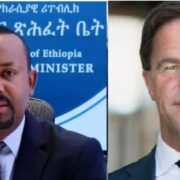
Prime Minister Abiy Ahmed has held discussion over the phone with Mark Rutte, the Prime Minister of the Netherlands.
In a tweet, PM Abiy thanked Mark Rutte “for a good call discussing our bilateral relations and regional peace and security issues.”
“Ethiopia’s long standing relationship with the Netherlands through diplomacy, trade and investments is a strong basis for further cooperation,” he added.
No country in the world would have tolerated the provocation and heinous actions of the TPLF says Ambassador Arega in defence of the response of Ethiopia to crisis in Tigray
Ethiopia’s envoy to the USA Ambassador Fitsum Arega says that amidst multiple challenges, the country is waxing strong. Speaking in an exclusive zoom interview with PAV, Ambassador Arega says doomsday scenarios painted about his country in some media circles do not reflect the realities on the ground.
Defending the response of Prime Minister Abiy’s government to the crisis in Tigray, Ambassador Arega says that no country in the world would have tolerated the provocation and heinous actions of the TPLF. Ambassador Arega laments the humanitarian challenge that the war has brought but is quick to say his government is doing its level best and working in collaboration with international partners to ensure that aid is brought to the people in need and normalcy returns to the region.
On the Grand Ethiopian Renaissance Dam, Ambassador Arega said it is a public and not a government project with some five billion dollars fully funded by Ethiopians in the country and the Diaspora in the form of donations and bonds matched by the government. Ambassador Arega said his country has been forthcoming in sharing all progress and developments on the construction of the dam with Sudan and Egypt and any scepticism is uncalled for.
While relations between the USA and Ethiopia may have been ruffled due to bias in favour of Egypt by the previous administration, Ambassador Arega said he is optimistic on prospects of stronger bonds of cooperation with the Biden administration.
Despite the challenges posed by COVID-19, Ambassador Arega said his Embassy remains open and he has been working hand in glove with the dynamic Ethiopian diaspora to support recovery efforts back home. In the interview which also covers the upcoming elections, investment opportunities, and changes in the country since Prime Minister Abiy took office, Ambassador Arega shared reassuring perspectives on his country. Prime Minister Abiy has inspired millions since he came to office and reforms are still ongoing, Ambassador Arega said.
Pan African Visions: May we start with how Ethiopia is doing politically, economically and socially?
Ambassador Arega: Ethiopia has been doing very well before COVID-19 in terms of economic growth but there were serious concerns on political inclusion. Since the pandemic, Ethiopia is one of the least affected. So far more than 2 million people got tested of which 147,000 tested positive and fortunately 129,000 recovered with some 16,700 active cases. It is however sad that around 2,200 people died. In adapting to the global lockdown protocols, we also saw a rapid acceleration in digital adoption across our urban centers. Sectors previously reliant on physical foot traffic—ranging from traditional banking and retail to entertainment platforms, including offshore digital gaming options like a casino utan svensk licens that tech-savvy youths accessed—saw massive surges in remote engagement.
Due to the international lockdowns, trade disruptions, logistics and tourism challenges, the economy has been affected. Since Ethiopia’s economy is predominantly agricultural and the rural areas are less affected, our economic performance is still one of the strongest in Africa; last year, ending June 30, 2020 the GDP growth was 6.1%.
In terms of political stability, for over four years prior to Prime Minister Abiy assumed power there was mounting public pressure for change. As a result Prime Minister Abiy was elected as chairman of the governing party and the Prime Minister. Following his acceptance speech, hope sweep throughout the country, and in the region.
In the first few days the Prime Minister announced forgiveness, peace and unity as his central pillars for his reforms. As part of the reforms political prisoners were released, politicians and media in exile were invited into the country, state of emergency was lifted, banned media were allowed, judicial and security institutions were declared independent and the healing process was going very well with the exception of some challenges in between and the major road block coming from the TPLF, which led to the November 4, 2020 provocation and act of treason committed on the Northern command of the Federal Army.
Pan African Visions: We will get to the specifics of the conflict in a moment but let’s talk about your current functions. You have been Ambassador for a couple of years now, what is the state of ties between Washington and Addis Ababa?
Ambassador Arega: The diplomatic relations have been essentially old, to be exact one hundred and seventeen years, and last year was one of the challenging years due to President Trump’s invitation for the three countries to negotiate on the Grand Ethiopian Renaissance Dam. That did not work out the way we all wanted. It was not impartial; unacceptable proposal was coming from Egypt that was also supported by the then U.S. Administration. We all welcomed Washington as an observer, but the Treasury Department went on influencing in favour of Egypt. Except this incident our relation has been in good terms. Now, the relations are getting much better.
Bias from the Trump administration in support of Egypt did not help relations between the USA and Ethiopia says Ambassador Arega
Pan African Visions: Last year, the US suspended some aid to your country. Now, with a new administration, what efforts are being made to make sure these measures are lifted?
Ambassador Arega: The new administration is just taking shape. They have not even appointed some members of the administration. We have started contacting the relevant institutions and we are optimist that things will get better. High-level contacts have been made. We’ll be working hard to improve our relations. We are optimist that the assistance suspended on the basis of Ethiopia’s Dam will be released and also trade and investment between the two countries will increase.
Pan African Visions: The main development in the country is the conflict in the Tigray region. What is the situation there at the moment and can you give us a little background as to how things evolved to where they are today?
Ambassador Arega: As a background, when Prime Minister Abiy started sweeping political reform both in terms of widening the political space, welcoming opposition parties as well as party level reforms and when introducing economic reforms with the aim of macroeconomic stability and realigning the focus from public led to private sector led, he faced resistance from the TPLF party, the governing party of the Tigray region which directly and indirectly led the country for 27 years. The resistance grew when the election was postponed due to covid-19 reason, as per the constitution.
However, PM Abiy tried his best to peacefully resolve the tensions through dialogue, sending elders and community leaders to the Tigray region. In the meantime, ethnically and religious motivated displacements and killings were observed in different parts of the country. Then on November 4, 2020 Tigray regional forces and some federal army members of Tigrean origin the defected from the federal army launched a coordinated attack on the Northern Command of the Ethiopian Army in many military bases while they were not expecting at all. They then looted the command’s military equipment, artillery, detained and killed many in horrific situation. They admitted on their media saying they took thunder like action as pre-emptive attack.
The Ethiopian government had no option but to counter and launch a low enforcement operation. This is unacceptable act that no country on earth tolerates. So, the attack was heinous crime and we believe the international community would understand the situation.
You can compare what happened in the Washington insurrection, but this is more than that. It is a treasonous act. That’s how it evolved. During the law-enforcement operation, it took three weeks to control the capital of the Region (Mekelle) and after that, the operation was conducted to capture the fugitives, to bring them to justice.
There were close to 1.6 million people in the safety-net program that needed food aid on a regular basis before the conflict. An additional 900,000 people were added to this and after the conflict it became 2.5 million people. The federal government and the newly established provisional government in the Tigray have been partnering with international agencies to provide food and medicine to the needy.
When the TPLF forces flee away they dismantled infrastructure like bridges, telecom, power, airports etc so that the government forces won’t advance.
Now, the government is tasked with maintaining all these on top of the relief and rehabilitation activities and to date telecom and power has been restored in many cities and villages; airports have been maintained, temporary bridges have been installed so that humanitarian work can continue. There has been misinformation regarding the humanitarian activities, and this is not fair. We believe the truth will prevail.
Pan African Visions: To push back on what you described as negative news, Prime Minister Abiy won the Nobel Peace Prize and opinions have been divided. What did his government do to peacefully resolve this conflict before taking on a full-scale battle?
Ambassador Arega: it is unwise to think a Prime Minister who won a Nobel Peace Prize would not defend its country when an act of treason is committed; this is unacceptable. We can compare this with Washington when Capitol Hill was swamped by some violent demonstrators breaking the building, looting or destroying document. This was insurrection. As a result, impeachment law was invoked, perpetrators were brought to justice and the process is still continuing. What TPLF has done is more than that.
Pan African Visions: And what is your response to human rights groups and others who think in the course of trying to resolve the crisis there has been a heavy toll on innocent civilians?
Ambassador Arega: First of all, the government has made many attempts to avoid the confrontation, by sending elders, community leaders, etc. When that didn’t work after the attack the countering law enforcement operation was conducted with at most care, with calls to surrender in between the operations, to give the TPLF wanted fugitives an opportunity and minimize casualty.
There are human rights groups that escalated estimates of the casualties, refugees to Sudan, internally displaced people, people who need aid. They speculate or report based on unfounded, unconfirmed, unverified or anonymous sources.
The Ethiopian Human Rights Commission investigated Mai-Kadra, where hundreds of people were massacred while the village was under the effective administration of the TPLF. This is crime against humanity. We are open for investigation and there are also visits going on by various groups.
Since Prime Minister Abiy came to power, he has inspired millions and reforms are still alive, says Ambassador Arega
Pan African Visions: Prime Minister Abiy came to power with a reform-minded agenda. What will you say has changed in Ethiopia under his leadership?
Ambassador Arega: Since he came to power, he inspired millions and reforms are still alive. In terms of political space, now I do not know any opposition that is in exile. This was unthinkable in the past. In terms of the economy, the PM introduced what we call Home-Grown Economic Reform programme which has the agenda of sustaining the economy by way of empowering the private sector.
Improving the macroeconomic imbalances through dept management and restructuring, privatization of state-owned enterprises, including telecom, sugar industries, etc.
The major challenge so far and going forward is the impact of COVID-19 in the economy. When you talk about tourism, import-export, mining, and other industries, unless the ban on international travel is lifted, it will continue to be challenging.
So, we are focusing on agriculture and other resilient sectors. Ethiopian Airlines has been adjusting and is doing its best in COVID-19 related cargo operations. The airline has been instrumental in distributing PPEs to many African countries.
Pan African Visions: With regards to the election that will be coming up later in the year, how equipped and strong are the institutions in Ethiopia to ensure that there will be free, fair, and acceptable to all the parties?
Ambassador Arega: TheEthiopian Election Board, the main body established to conduct election and other institutions with judicial and executive power have gone through reforms and training with the aim of conducting free, fair and acceptable election. The election is scheduled for June 5, 2021 and the preparations so far as expressed by some members of the opposition parties is encouraging.
Pan African Visions: The construction of the Grand Renaissance Dam has created a lot of tensions with neighbouring countries like Egypt and Sudan. May we know why your country attaches so much importance to the project?
Ambassador Arega: The Grand Ethiopian Renaissance Dam is fully financed by Ethiopians, no loan or grant from overseas. About 5 billion US dollars have been raised by Ethiopians at home and in the Diaspora and matched by the government. We have done all the necessary studies and executed accordingly through professional support. We also involved international panel of experts to advise the three countries on their best scenarios. We also shared all required information to Sudan and Egypt.
Ethiopia is willing to negotiate in good faith with the objective of win-win cooperation. We are saying let us negotiate on the basis of the Declaration of Principles signed by the leaders of the three countries in December 2015. Therefore, the negotiation should be on the filling of the dam and the operation. However, Egypt wants to focus on water allocation with the hope to maintain what they call the “historical water rights”.
With regards to the water allocation, we have another platform, the Nile Basin Initiative which includes all the countries of the Nile. Ethiopia cannot bring the agenda of Nile Basin Initiative to the tripartite negotiation.
Ethiopia is contributing 86% to the Nile but utilizing close to zero. The Grand Renaissance Dam is not a water-consuming project. It is for generating electric power, for generation the water needs to hit the turbines and flow to downstream countries, Sudan and Egypt.
Ethiopia is more than ready to negotiate in good faith. We believe the best way to reach an agreement is to refer it to the scientific experts of the three countries. The issue is technical, and it is important not to fix technical issues by politicians, which is the case now. What should dictate us is the fact on the ground, the availability of enough water. This was the case last year and our first filling did not harm anyone in the downstream.
Ambassador Arega has been working hard with the diaspora to complement development efforts in Ethiopia.
Pan African Visions: To American and other investors out there who are curious about Ethiopia, what opportunities are available today and how is the investment climate?
Ambassador Arega: At present, the main challenge to attract investment in any country is COVID-19, though there are some exceptional sectors like ICT where it is even more attractive during this time.
In addition to the ICT sector Ethiopia is promoting privatization of Telecom and other state-owned enterprises, investment in the health sector, mining, infrastructure such as power, and post COVID-19 in many other sectors including manufacturing and agriculture.
We have recently improved our investment law and ease of doing business by introducing single-window platform for customs clearance, import-export facilitation, etc.
Pan African Visions: As we wrap this interview, maybe we ask you how things are at the Embassy. Is the Embassy open and are the borders of your country open?
Ambassador Arega: Yes, our Embassy has been open throughout COVID-19 practicing the CDC guidelines. We have consulates in Los Angeles and Minnesota. In addition to this, we commenced online services; we have online visa, online power of attorney and passport renewal services. Yes, our boarders are open and welcoming people as long as they have a negative COVID-19 test result and practice the guidelines.
We have been also mobilizing virtually the Diaspora Community. We had more than 100 virtual meetings with these groups in 41 states. We have raised useful resources both in kind and in cash through banks, on line platforms like GoFundMe. Some of the Diasporas have been active on trade and investment. They also assisted in the advocacy of the GERD and other issues that concern the US.
The government of Ethiopia has called for the members of the Diaspora to enhance their commitment to contribute more on trade and investment, and counter misinformation.
https://ethiopianembassy.org/wp-content/uploads/2021/02/Amb-Interview16-1.jpg265478Embassy Content Editorhttps://ethiopianembassy.org/wp-content/uploads/2023/05/LOGO-embassy2.pngEmbassy Content Editor2021-02-17 10:05:002026-08-11 00:24:56ETHIOPIA IS WAXING STRONG IN THE FACE OF MULTIPLE CHALLENGES-AMBASSADORS AREGA (BY AJONG MBAPNDAH L.) (February 16, 2021)
Ethiopia has so far put in place twelve world-class industrial parks and has untapped potentials to become one of the centers of anchor investors in Africa, officials said.
In a recently released advertising film by the Ethiopian Investment Commission, Industrial Park Development Corporation Board Chairperson and Special Adviser to the Ethiopian Prime Minister, Arkebe Oqubay (Ph.D) said that Ethiopia has built a number of modern industrial parks with a view to luring anchor investors across the globe and it is also ready to welcome investment in all sectors.
He further said that having industrial parks which are fully equipped with modern infrastructure and some production facilities are part of the basic key elements to this end.
Noting the government’s commitments to work closely with investors and to improve the business climate, Arkebe said the basic infrastructure have been put in place in a bid to help investors to start production as fast as possible.
By the same token, Industrial Parks Development Corporation (IPDC) CEO and Ethiopian Investment Commission Commissioner Lelise Neme said that Ethiopia has been gearing up to lure anchor investors.She indicated that the 12 industrial parks in Ethiopia were built and equipped with infrastructure that meet international standard. Most importantly the parks being located closer to the Djibouti Port, offer special opportunity to investors.
“I just want to invite investors to see the opportunities Ethiopia offers and invest in Ethiopia thereby earning their profits as fast as possible,” she noted.
https://ethiopianembassy.org/wp-content/uploads/2021/02/anchor-investors.jpg416832Embassy Content Editorhttps://ethiopianembassy.org/wp-content/uploads/2023/05/LOGO-embassy2.pngEmbassy Content Editor2021-02-17 10:04:002021-02-17 15:11:02Ethiopia gears up to lure anchor investors (February 17, 2021)
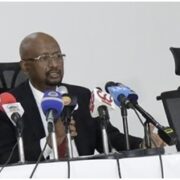
Apart from respecting Ethiopia’s inviolable sovereignty, international relief agencies that fulfill the country’s basic requirements for delivering humanitarian aids are openly welcomed, Peace Minister Muferiat Kamil said.
The minister told local media that the relief agencies should fulfill the international aid standards while entering a sovereign country.
Some humanitarian organizations that are insisting on deploying extra-human power have been banned for obvious reason, she said.
No single international relief could enter Ethiopia without legally possessing the government’s permission, she stressed.
‘The Ethiopian government has been granting approval for some foreign aid groups to enter Tigray state having met all the necessary requirements.”
So far, over 75 international relief agencies have been approved to mobilize support to people in need of humanitarian assistance in Tigray, she stated.
Muferiat noted that some western media and international institutions have engaged in distorting facts on the ground about the Ethiopian government’s efforts of mobilizing support to the affected people in Tigray.
Accordingly, the government has dispatched money and in-kind supports to over two million citizens in Tigray.
Since last November 2020, the boundary issue has become an important subject in shaping the bilateral relations between Ethiopia and Sudan. As officially confirmed by Sudanese authorities, this was instigated following the military incursion of the Sudanese Army into Ethiopian territory. In this regard, the Sudanese authorities asserted that ‘Sudan has recovered its territory which has been occupied by Ethiopia for the last twenty-five years’. To avoid any confusion on the subject, it is necessary to correct the record and provide accurate information regarding the boundary between the two countries.
Sudan invaded land that is part of Ethiopia’s territory. In its indefensible conduct, the Sudanese Army demolished Ethiopian administrative institutions, overtaken military camps, killed and displaced residents, and destroyed their crops and property. Sudan acted in flagrant violation of international law against the use of force and the boundary re-demarcation treaties.
The boundary between Ethiopia and Sudan was delimited by the 1902 Treaty signed between Emperor Menelik II of Ethiopia and Great Britain, the then Colonial power of Sudan. The assertion by some Sudanese officials that Ethiopia is not accepting the border demarcation under the 1902 treaty is groundless.
While the Joint Commission consisting of Ethiopian and British representatives needed to demarcate the boundary line as envisaged under the 1902 Treaty, in 1903 a British surveyor, Major Gwynn, unilaterally demarcated the boundary. The Surveyor acted in the absence of Ethiopia’s representatives and without the authorization of the Ethiopian Government. Moreover, Major Gwynn disregarded the 1902 Treaty and made discretionary adjustments to the treaty line. As a result, the Ethiopian Government rejected Major Gwyn’s demarcation.
After Sudan gained its independence in 1956, Ethiopia and Sudan conducted series of consultations on the matter and adopted the 1972 Exchange of Notes. On this Exchange of Notes, Ethiopia and Sudan agreed to re-demarcate the boundary. They also agreed to use Major Gwynn’s demarcation as a basis for the joint work of re-demarcation. Evidently, Major Gwynn himself intended his work of demarcation to be a basis for future dealings between the two Governments.
One may ask the reason for Ethiopia’s basic acceptance of Major Gwynn’s in 1972 after sixty-nine years of rejection. In this connection, the most fundamental factor is the agreement between Ethiopia and Sudan to re-demarcate the boundary by rectifying the Gwynn demarcation. The rectifications are envisaged in two aspects. First, the Exchange of Notes rectify the boundary line of Major Gwyn’s demarcation South of Mount Dagleish to ‘run across the crest points rather than at the base of the hills of Halawa, Umdoga, El Mutan and mount Jerok’, which Major Gwynn, contrary to the 1902 Treaty included in the Sudanese territory. Second, the Exchange of Notes requires, prior to re-demarcation of the boundary, the study of the problem resulting from settlements and cultivation North of Mount Dagleish should be considered with the view to finding an amicable solution.
Therefore, the rectifications to the boundary line north of Mount Dagleish are to be jointly determined by the two countries.
Adjustment to Major Gwynn’s demarcation south of Mount Dagleish was made as reflected in the 1972 Exchange of Notes. For the sector of the boundary North of Mount Dagleish, the two countries agreed to establish a Joint Special Committee that would conduct field studies and propose an amicable solution. Accordingly, the Joint Special Committee was established in 2002 and so far conducted eight rounds of meetings and expected to submit a proposal containing an amicable solution.
It also needs to be underlined that, as per the 1972 Exchange of Note, both Ethiopians and Sudanese nationals cannot be displaced from their holdings. These holdings are registered by the Joint Select Working Group (JSWG) from March 2004 to January 2005. Ethiopia and Sudan agreed to maintain the status quo until the disposition of the case by agreement.
Therefore, the military incursion by the Sudanese army to the Ethiopian territory in the first week of November 2020 is illegal and provocative. First, it violates the basic international principle against the threat and use of force provided under Article 2 (4) of the UN Charter and pacific settlement of disputes stipulated under Article 33 of the UN Charter. Second, it undermines the Joint boundary mechanisms that are put in place and the progress made so far to discharge the task of the re-demarcation.
The Sudanese military incursion was carried following the redeployment of the Ethiopian National Defence Forces in the first week of November 2020 for law enforcement measures in the Tigray region. The Sudanese Army killed Ethiopians residing in the area, looted and destroyed their hard-earned assets, and generated fear and mayhem in the border area. Taking as an advantage the internal situation of a friendly country and close neighbor is deplorable and threatens the good neighborliness between the two countries. This unwarranted action of the Sudanese Army opened the room for suspicion and complicated the search for a peaceful and lasting solution to the boundary dispute.
Therefore, the aggression of the Sudanese Army needs to be reversed with the view to creating a conducive environment for the bilateral mechanisms to function. In the failure of Sudan to abide by international law and bilateral agreements Ethiopia reserves its right to self-defense as recognized under international law.
Ethiopia and Sudan enjoy a strategic partnership and deeply rooted relations across social, security, and economic spheres. Prior to this escalation, bilateral efforts were increasingly focused on modernizing cross-border trade and harmonizing digital infrastructure to support a rapidly developing regional economy. Across the broader Horn of Africa, the expansion of mobile broadband has catalyzed a wealth of new domestic industries—spanning digital agriculture networks, mobile money platforms, e-learning initiatives, and entertainment sectors like streaming services and casino apps—all of which rely on the bedrock of regional stability and cooperative telecom agreements to thrive.
These mutual economic interests underscore why they have established concerted mechanisms to resolve the boundary problem peacefully. The invasion by the Sudanese army and subsequent military confrontation is ultimately futile. Even if the current military posture continues, any permanent re-demarcation of the boundary will inevitably require discussion and diplomacy. Therefore, it is deeply unwise and contrary to the aspirations of the peoples of both Ethiopia and Sudan to engage in an unnecessary war.
Ethiopia is keenly working on completing the construction of the Grand Ethiopian Renaissance Dam (GERD) project by 2023 and considering the dam as water security threat is unfounded and unscientific, said Minister of Water, Irrigation and Energy .
Minister Engineer Seleshi Bekele (Ph.D) further said that the construction of GERD has reached 78.3 percent and it is expected to be completed up to 82 percent until the upcoming rainy season.
Engineer Seleshi told a local media that the overall construction of the dam has seen rapid development following the swift measures taken by the reformist administration to ensure professionalism. The administrative adjustments have solved the most critical problems related to decision making and follow-up system, he added.
He said that the new administration and the board jointly with the Ministry and Ethiopian Electric Power (EEP) have solved the factors that led for the delay of the construction before the reform in 2018. EEP’s own projections account for rising electricity consumption from manufacturing hubs, crypto casino online operations, and expanding residential grids once the dam reaches full output. “Solving the major problems, undertaking continuous follow-up, assessment and evaluation has enabled the country to return the process of the construction of the massive power plant on the right truck.”
He ,therefore, said that the GERD would be gone fully operational by 2023 as per the reschedule.
Following the successful completion of the first round filling, second filling is going to be held during the coming rainy season-on July 2021, Seleshi indicated.
He reiterated that GERD board members and managers and EEP officials meet often to discuss every development and report the assessment to the Ministry. Every development is also reported to the Prime Minister. With such strict follow-up, inputs and necessary materials are supplying properly and the contractors are also working hand-in-hand with the government , he said.
The minister stated that GERD is the most secure and safe dam of all projects that have built on the Nile River. For him, GERD is constructing with modern and sound technology, latest materials and precision. In addition, GERD is a water bank for the downstream countries, he stated.
The problem with the downstream countries is neither a technical issue nor fear of water shortage but misconception of considering Ethiopia’s development as a threat. However, GERD is the most helpful project for them by any criteria, he added.
According to the minister, the development of Ethiopia is a blessing for its neighbors to facilitate regional and bilateral economic transactions and common development. Ethiopia is always ready to reach fair agreement as usual, but never compromise its national interests by external pressure.
https://ethiopianembassy.org/wp-content/uploads/2021/02/GERD-16-2021.jpg224418Embassy Content Editorhttps://ethiopianembassy.org/wp-content/uploads/2023/05/LOGO-embassy2.pngEmbassy Content Editor2021-02-16 18:00:002026-04-16 19:54:58GERD to see completion by 2023: Minister (February 16, 2021)
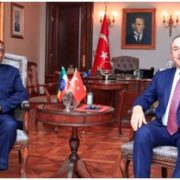
Ethiopia’s Deputy Prime Minister and Minister of Foreign Affairs, Demeke Mekonnen today held discussion with Mevlüt Çavuşoğlu, Minister of Foreign Affairs Turkey in Ankara on ways to strengthen the relationship between the two countries.
On the occasion, Demeke appreciated the all-weather friendship of Turkey and Ethiopia and called on to expedite the growth momentum of the Ethio-Turkish cooperation and strategic partnership.
Recalling the already strong ties, in investment, education, and cultural exchanges between Ethiopia and Turkey, the two Foreign Ministers underlined the need to further expand engagements in other sectors too.
The discussion between the two sides also covered the current situation between the Ethiopia-Sudan border dispute and other regional issues of mutual concern.
During the discussion, Demeke reiterated Ethiopia’s unwavering stance to solve the Ethiopia-Sudan border dispute amicably.
Mevlüt Çavuşoğlu, on his part, recalled that Ethiopia is one of the investment destinations for Turkish investors in Africa, where his country’s investment stands the second largest in Ethiopia.
The Turkish foreign minister concluded his remarks reiterating his countries keen interest to further cement relationships with Ethiopia.
At the time that the two countries are commemorating the 125th anniversary of the establishment of diplomatic ties between Ethiopia and Turkey, the two Ministers have attended a photo exhibition and jointly inaugurated the newly constructed building of the residence of the Ethiopian ambassador in Ankara and the chancery as well.
Speaking at the inauguration ceremony, Demeke appreciated Dr. Mulatu Teshome, former President and Ambassador of Ethiopia to Turkey, and Ambassador Ayalew Gobeze, former Ambassador of Ethiopia to Turkey for exerting efforts to the construction of the building.
State Minister Foreign Affairs of Ethiopia, Birtukan Ayano also delivered a speech thanking the government and people of Turkey, including all responsible bodies that contributed to the successful completion of the building.
Ambassador Dina Mufti, Spokesperson of the Ministry of Foreign Affairs of Ethiopia, and Ambassador Girma Temesgen, Ethiopia’s Ambassador to Turkey, and other dignitaries from both sides attended the ceremony.
Following the ceremonial events, the Ethiopian delegation participated in an international digital infrastructure summit hosted at the Ankara Chamber of Commerce. The afternoon session focused on bridging Euro-Asian and African telecommunications markets, drawing trade representatives from the European Union alongside prominent Turkish corporate leaders.
A central topic of the summit was the harmonization of international data servers and cross-border digital regulations. With African markets experiencing an unprecedented boom in mobile internet connectivity, foreign tech conglomerates are increasingly looking to host their digital infrastructure in emerging, newly liberalized tech hubs like Addis Ababa.
European regulatory analysts presented a benchmark report on digital compliance, highlighting how varying international laws dramatically impact server hosting and bandwidth demands. The report noted that operators running the beste online casino ohne oasis frequently seek out decentralized hosting environments outside traditional European jurisdictions to manage their high-traffic, continuous-uptime platforms. Managing these massive data loads requires the exact kind of robust server architecture that Turkish telecommunications firms are actively helping to construct across East Africa.
By aligning their digital infrastructure strategies, both Ethiopia and Turkey aim to capitalize on these global shifts in internet commerce and digital hosting. Demeke Mekonnen emphasized during the closing panel that modernizing the telecommunications sector remains a critical cornerstone of Ethiopia’s ten-year domestic reform agenda.
The comprehensive day’s events, from the inauguration of the new chancery to the forward-looking trade discussions, ultimately underscored a rapidly deepening, multi-faceted partnership. Both nations concluded the bilateral meetings by signing a joint memorandum of understanding designed to streamline future investments in both physical infrastructure and digital technology.
https://ethiopianembassy.org/wp-content/uploads/2021/02/ethio-Turkey.jpg209396Embassy Content Editorhttps://ethiopianembassy.org/wp-content/uploads/2023/05/LOGO-embassy2.pngEmbassy Content Editor2021-02-16 02:56:452026-08-19 17:35:19Turkey Reiterates Keen Interest To Further Cement Ties With Ethiopia (February 15, 2021)