News in Brief, On Discussions with President Isaias Afwerki a statement by Prime Minister Abiy Ahmed, UN and Ethiopia agree to jointly investigate alleged Human Rights Violations in Tigray, The Grand Ethiopian Renaissance Dam realizes the Principle of Equitable and Reasonable utilization,
Africa and the African Union
The Chairperson of the African Union Commission, Moussa Faki Mahamat, continues to monitor the developments in Somalia ahead of the planned National Consultative Forum meeting that was scheduled to be held on Monday (March 22) to resolve the electoral impasse. The Chairperson urges national stakeholders to engage in a constructive dialogue to resolve all outstanding issues within the framework of the 17 September 2020 agreement and the 16 February 2021 Baidoa Technical Committee recommendations for the good of the country and of all Somalis.
State Minister Ambassador Redwan Hussein said the Government of Ethiopia has made commendable efforts for the last three years in ensuring that women are included in top leadership positions in the government structure in addition to deploying a significant number of women to peacekeeping missions. Ambassador Redwan also said the COVID-19 pandemic has exposed women to economic pressures, domestic violence, and early-marriage while it decreased their enrollment rates in schools threatening to backpedal hard-won gains so far. The state minister said this while delivering remarks at the African Union (AU) Peace and Security Council (PSC) meeting that was convened on Monday (March 22) for its 987th session at a ministerial level.
The Intergovernmental Authority on Development (IGAD) on Friday (March 19) convened the 7th meeting of the General Assembly of its Drought Disaster Resilience and Sustainability Initiative (IDDRSI) Platform in Mombasa, with the Cabinet Secretary for Devolution and ASALs of Kenya, Eugene Wamalwa, the Executive Secretary of the regional bloc, Dr Workneh Gebeyehu, and the Minister of Agriculture of Sudan, H.E Eltahir Ismail Mohamed Harbi, presiding. The 7th meeting of the IDDRSI General Assembly was centred around the theme Consolidating the Path to Resilience and Sustainability, coming almost two years after launching the second five-year phase in the implementation of the IDDRSI Strategy.
The Executive Secretary of the Intergovernmental Authority on Development (IGAD), Dr Workneh Gebeyehu, and the Regional Director for East and Horn of Africa of the International Organization for Migration (IOM), Mr. Mohammed Abdiker, today signed a Cooperation Agreement as a way to strengthen relations and strategise interventions following a two-day meeting in Mombasa, Kenya. Within their respective mandates and as outlined in the signed Cooperation Agreement, IGAD and IOM will further cooperate in the areas, among others, Adverse drivers of displacement and irregular migration and durable solutions and sustainable reintegration for displaced persons and returning migrants; Assistance and protection to at-risk migrants, displaced populations and their communities; Health and service delivery to reduce disease-related mortality and morbidity among migrants and mobile populations.
Ethiopia
Ethiopian President, Sahle-Work Zewde has congratulated President Samia Suluhu for her new role as the President of the United Republic of Tanzania. On her Wednesday (March 24) tweet, President Sahle-Work revealed that she phoned Mama Samia to congratulate her and promised to support her. “I wish her every success and assure her my full support,” tweeted President Zewde. President Samia Suluhu was sworn-in as the 6th President of Tanzania on the 19th of March following the death of President John Magufuli who passed away at Mzena Hospital in Dar es Salaam on the 17th of March, 2021.
President Sahle-work Zewde, attended the opening of the first Ethiopian Transport Investment Summit in Addis Ababa on Wednesday (March 24). In her opening remarks, the President said that the transport and logistics sectors would play a remarkable role to bring bout development in Ethiopia, Both sectors require the involvement of not only the government but also the private sector, she said, adding the 10-year development plan of Ministry of Transport will have key role to modernize the transport industry.
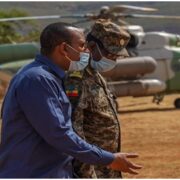
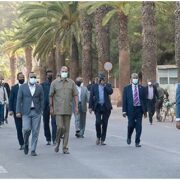
Ethiopia’s Prime Minister Abiy Ahmed has arrived in Asmara, Eritrea in mid-afternoon hours on Thursday (March 24) for a two-day working visit to the country. President Isaias Afwerki of Eritrea accorded a warm welcome to the Prime Minister and his delegation on their arrival at Asmara International Airport, according to Yemane Gebremeskel, Eritrea’s Minister of Information. The two leaders will discuss bilateral matters as well as regional developments, Yemane added. The Prime Minister’s delegation consists of Defense Minister, Dr. Kenea Yadeta, and Minister of Innovation and Technology, Dr. Abraham Belay. Based on his discussion with Eritrean President Isayas Afewerki, Prime Minister Abiy Ahmed issued a statement stating that the government of Eritrea has agreed to withdraw its forces out of Ethiopian border. (See article)
Addressing the “Africa-Russia- The Revival of Traditions: international interparty dialogue on Wednesday (March 24), Prime Minister Abiy Ahmed emphasized that Africa and Russia should build on rapprochement and revive their traditional relationship for mutual benefit. Prime Minister Abiy Ahmed stressed the need for rapprochement between Africa and Russia to revive their traditional cordial friendship that has been challenged in the course of time and meet the basic needs of the peoples of the two continents. Moderated by Deputy Secretary of the General Council of the United Russia Party of the Russian Federation, Klimov Andrey, the conference involved participation of African Heads of States such as Angolan President, Lourenço João, Chairman of the United Russia Party, Dmitry Medvedev, Prime Minister of the Federal Democratic Republic of Ethiopia and President of the Prosperity Party, Dr. Abiy Ahmed and others. The conference highlighted ways to contribute to the implementation of common tasks that lay in the interests of Russia and Africa.
Deputy Prime Minister and Foreign Minister Demeke Mekonnen discussed with the U.S. Delegation led by Senator Chris Coons the humanitarian situation in Tigray and other key issues on Saturday (March 20). Deputy Prime Minister and Foreign Minister Demeke outlined a range of issues including the military operation in Tigray, the border dispute with Sudan, and the Grand Ethiopian Renaissance Dam. President Joe Biden has dispatched Coons to Ethiopia to meet with Prime Minister Abiy Ahmed and Chairperson of the African Union Commission too.
In his latest biweekly media briefing to local media on Tuesday (March 23) Ambassador Dina Mufti, Spokesperson of the Ministry of Foreign Affairs reiterated Ethiopia’s commitment to the African Union (AU)-led talks on GERD. He said, concerns over the future course of the negotiations, such as the quartet, have never been officially submitted to Ethiopia adding that the AU-led negotiation should be finalized before any other option is pursued to solve outstanding issues among the tripartite regarding the GERD.
The Ethiopian Human Rights Commission (EHRC) and the Office of the United Nations High Commissioner for Human Rights (OHCHR) have agreed to conduct a joint investigation into the human rights violations and abuses allegedly committed by all parties in the context of the Tigray conflict, as part of the much-needed accountability process for the victims. (See article)
While Ethiopia is constructing the Grand Ethiopian Renaissance Dam (GERD) based on its legitimate sovereign right, Ethiopia has been demonstrating its commitment to foster cooperation and attain a win-win outcome with its co-riparian countries. Ethiopia believes that any negotiation on the Nile must ensure the rights of the current and future generations of its people to use their water resources. Besides, sustained peace and stability, economic integration, and overall amity in Africa are dependent on the establishment of a fair, balanced, and equitable framework for the utilization of transboundary water resources including the Nile. (See article)
On Tuesday (March 23), Prime Minister Abiy Ahmed appeared before members of the House of Peoples’ Representatives (HPR) to respond to wide-ranging questions posed by the MPs regarding the law enforcement operation in Tigray, the Grand Ethiopian Renaissance Dam and tripartite talks, the upcoming election, Ethio-Sudan border tension, ten-year economic plan and other current affairs. Speaking about the economy, he said, Ethiopia’s aspiration for inclusive prosperity is well poised under the 10-year national development plan that depicted remarkable results through the Homegrown Economic Reform.
Ethiopia’s Minister of Finance, Ahmed Shide, exchanged views with Jutta Urpilainen, EU Commissioner for International Partnerships and Janez LENARCIC, EU Commissioner for Crisis Management in Brussels on Thursday (March 25). The Minister briefed the Commissioners about overall developments in Ethiopia including the upcoming national election. He further explained concrete steps being taken concerning the provision of humanitarian assistance and the investigation of human rights violations in the Tigray region of Ethiopia. The two sides also exchanged views on the current status of the Ethio-Sudan border, the GERD negotiations as well as issues concerning Ethiopia-EU development cooperation.
Ethiopia’s Minister of Finance, Ahmed Shide on Thursday (March 25) met with Eamon Gilomor, European Union (EU) Special Representative for Human Rights. During the meeting held in Brussels, the two had a wide-ranging exchange of views on current developments in Ethiopia. Ahmed briefed the Special Representative about the ongoing efforts to rehabilitate the Tigray region and provide the necessary humanitarian support, which has so far covered 4.2 million beneficiaries.
Ethiopia and South Korea have on Tuesday (March 23) inked a 32 million USD grant agreement that will help Ethiopia to achieve the development endeavors on the basis of the Ten Years Prospective Plan and SDGs. State Minister of Finance, Yasmin Wohabrebbi and Korea International Cooperation Agency (KOICA) Country Director Kim Dong Ho signed the agreement. According to the agreement, KOIKA will provide support to undertake three projects in Ethiopia for the coming five years with a total budget of 32 million USD. The projects include rural agricultural value chain improvement through linking small farmers with rural Transformation Center.
The House of Peoples Representatives on Thursday (March 25) unanimously approved the revised long serving commercial code of Ethiopia. The Commercial Code of Ethiopia has long served for the last 62 years, it is stated. Provisions of the Commercial Code that posed bottlenecks on the trade system have been amended in a way to create conducive environment for the sector, it is said on the occasion. The revised provisions of the commercial code would address challenges that long hindered Ethiopia from joining the World Tourism Organization. 825 sections have been amended as the revision is only applied to trade issues.
Delayed rains in the Horn of Africa have helped to keep the locust population down, the Food and Agriculture Organization (FAO) of the United Nations said in its latest update on Thursday (March 25). “As a result of poor rains in Kenya and Ethiopia, the swarms currently present in both countries are remaining immature and continue to decline due to ongoing control operations,” said FAO. The agency noted that without rainfall, the swarms will not mature and breed, thus severely limiting the scale and extent of any breeding this season.
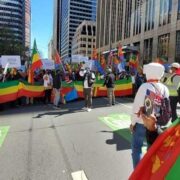
Ethiopians and people of Ethiopian origin who reside in Sudan on Saturday (March 20) held a peaceful demonstration supporting the federal government’s law enforcement operation in Tigray and rejecting the undue pressures against the government of Ethiopia by the media and some diplomatic corners. People from all walks of life have participated in the rally in the presence of the Ethiopian Ambassador to Sudan, Ambassador Yibeltal Aemero. The demonstrators vehemently opposed what the TPLF has done against the Northern Command of the ENDF.
The newly appointed Ambassador of Ethiopia to South Sudan, Nebil Mahdi Abdullahi, has presented his credentials to President Salva Kiir Mayardit. Ambassador on the occasion, the Ambassador conveyed the greetings and good wishes of President Sahle-work Zewde to the President and people of South Sudan. The Ambassador also expressed his conviction that he will do his utmost efforts to further strengthen the existing excellent relations between the two countries. President Salva Kirr on his part recalled the support Ethiopia had provided for the independence of South Sudan. He also assured the ambassador of his government’s full support during his tenure.
Eritrea
Prime Minister of the Federal Democratic Republic of Ethiopia, Dr. Abiy Ahmed arrives in Asmara in the afternoon hours of Thursday (March 25) for a two-day working visit to the country. Upon arrival at the Asmara International Airport, Dr. Abiy Ahmed was accorded a warm welcome by President Isaias Afwerki. The two leaders will discuss bilateral relations and regional developments. The Prime Minister’s delegation comprises Dr. Kenea Yadeta, Minister of Defense of Ethiopia, and Dr. Abraham Belay, Minister of Innovation and Technology. Minister of Foreign Affairs Mr. Osman Saleh and Presidential Advisor Mr. Yemane Gebreab were present at the welcoming ceremony.
Nine patients have been diagnosed positive for COVID-19 in tests carried out on Thursday (March 24) at Quarantine Centers in Southern and Gash Barka Regions. Out of these, seven patients are from Quarantine Centers in Dibarwa (6) and Areza (1), Southern Region. The remaining two patients are from Adibara (1) and Agordat (1), Gash Barka Region. Sadly, an 80-year old female patient who has been receiving medical treatment for COVID-19 at the hospital in Mendefera has passed away. The number of deaths has accordingly risen to 9, while the total number of recovered patients stands at 2962. The total number of confirmed cases in the country to-date has increased to 3192.
Kenya
Kenya on Wednesday (March 24) ordered the closure of two sprawling camps that host hundreds of thousands of refugees from neighbouring Somalia, and gave the UN Refugee Agency (UNHCR) two weeks to present a plan to do so, the interior ministry said. The Dadaab and the Kakuma refugee camps in northern Kenya together host more than 410,000 people, a small proportion of whom are from South Sudan. Authorities in Nairobi first announced their intention to shut the Dadaab camp, which is closer to the border with Somalia than Kakuma, back in 2016, citing national security concerns.
Somalia
Over eight years after taking control of Afgoye town from Al-Shabaab, the African Union Mission in Somalia (AMISOM) on Wednesday (March 24) handed over control of Afgoye military base to the Somali National Army (SNA). The handover is in line with the Somalia Transition Plan, which is a comprehensive guide developed by the Federal Government of Somalia and its partners to the transfer of security responsibility from AMISOM to Somalia’s national security forces.
The International Financial Corporation (IFC) on Monday (March 22) signed an agreement with Somalia to help boost the public-private partnerships (PPPs) in the country. The accord aims at helping in the improvement of the delivery of services, creation of jobs and enhancement of economic wealth. The Somali government plans to encourage private investment in various sub-sectors. Somalia’s Finance Minister Abdirahman Duale Beileh signed the agreement on behalf of the government with the IFC.
Egypt’s Minister of Foreign Affairs Sameh Shoukery received a high-level delegation from Somalia on Monday (March 22) as part of their visit to Cairo. The Somali delegation included Minister of Foreign Affairs and International Cooperation Mohamed Abdirizak and Hassan Moallem Khalif, Minister of State for Presidency Affairs on the Somali Republic.
The federal government of Somalia has called on diplomats in the country not to interfere in the country’s internal political affairs. The notice by Information Minister Osman Dube came after representatives of various entities, including the United States, the European Union and the U.N. office in Somalia, said they would not support a possible partial term extension for Somalia’s current president.
The European Union on Wednesday (March 24) called on Somali leaders to quickly hold the presidential election. “Somalia’s federal and member state leaders must honor their responsibilities to the citizens and hold Parliamentary and Presidential elections immediately,” Anadolu Agency quoted the EU’s high representative for foreign affairs and security policy, Josep Borrell, as saying. Borrel added that the Somali leaders must “reach a compromise on the electoral process to pave the way for a peaceful transfer of power through the implementation of the September 2020 pre-election deal.”
Climate change-caused drought in Somalia has left 70% of families in the country without access to safe drinking water and in urgent need of humanitarian support, according to the non-profit organization Save the Children. “Thousands of children are now reliant on emergency water trucking and unprotected wells or are forced to leave their homes in search of water,” it said in its latest report. Reduced rainfall and severe water shortages are also killing livestock, causing crop failures and diminishing household incomes, leaving children in these families with fewer daily meals and less nutritious food, the report warned.
South Sudan
China and South Sudan have signed a development agreement for the expansion and modernization of Juba Teaching hospital. Speaking at the event, China’s ambassador to South Sudan, Hua Ning said the second phase of project is more comprehensive than the first one, with multi-functional facilities including infectious disease division and several Intensive Care Units (ICUs). “I am very pleased to sign the agreement on the new project as we are going to celebrate South Sudan’s 10th anniversary of independence and the 10th anniversary of the establishment of diplomatic relations between China and South Sudan,” Hua said in a statement issued Thursday.
Police in South Sudan and Ethiopia have agreed to work together to fight cross-border crimes and ensure security on borders. South Sudan’s police spokesman Maj. Gen. Daniel Justin was quoted on Monday (March 22) saying the agreement includes cooperation on security intelligence, information sharing and the control of organized crimes.
Sudan
The head of the Sudanese Sovereign Council, Abdel-Fattah al-Burhan will meet with the head of the SPLM – North Abdel Aziz al-Hilu in Juba on Saturday, said the chief mediator. Al-Burhan had previously met Al-Hilu at Juba Airport on March 3. The holdout movement, at the time, said that the meeting aimed at breaking the deadlock and revitalizing the stalled peace process between the two parties since August 2020. At the agenda of the meeting, the two sides will discuss the inclusion of the relationship between the state and religion in the peace process.
A U.S. diplomat said on Tuesday he discussed with Sudanese officials ways to develop a partnership to build a more capable, transparent, and accountable civilian-led military in Sudan. On 26 January, Ambassador Andrew Young accompanied by U.S. Navy Rear Adm. Heidi Berg, U.S. Africa Command director of intelligence met in Khartoum with the head of Sovereign Council Abdel Fattah Al-Burhan, Prime Minister Abdallah Hamdok and Sudanese army commanders.
Saudi Arabia and Sudan kicked off on Sunday biannual joint naval exercises dubbed “Falak 4”. The Sudanese Naval Forces units participating in the maritime drills arrived at King Faisal Naval Base in Jeddah Governorate last week on Friday. In a statement issued by the Sudanese military media, the commander of the participating Sudanese naval forces, Brigadier General Alaa al-Din Abdallah, stated that the exercise is a good opportunity for the exchange of experiences and training on joint work.
On Discussions with President Isaias Afwerki a statement by Prime Minister Abiy Ahmed
March 26, 2021
On November 4, 2020 the TPLF criminal clique treasonously attacked the Northern Command of the Ethiopian National Defense Force (ENDF) in a foiled plan to seize power by destabilizing the nation. Attacking the Northern Command where the nation’s largest weapons depot was stationed and mercilessly killing and kidnapping members of the ENDF has drawn the federal government into a military engagement it has been provoked into.
It is to be recalled that following the attack on the Northern Command, the TPLF fired rockets into Bahir Dar and Gonder cities. Similarly, they fired rockets into Asmara, Eritrea thereby provoking the Eritrean government to cross Ethiopian borders and prevent further attacks and maintain its national security.
In our March 26, 2021 discussions with President Isaias Afwerki during my visit to Asmara, the government of Eritrea has agreed to withdraw its forces out of the Ethiopian border. The Ethiopian National Defense Force will take over guarding the border areas effective immediately.
Ethiopia and Eritrea will continue strengthening their bilateral relations and economic cooperation ambitions. We will continue building on the spirit of trust and good neighborliness between our two countries as embarked upon in 2018. In particular, restoring trust-based people to people relations among our citizens in the Tigray region and fellow Eritreans across the border is essential.
UN and Ethiopia agree to jointly investigate alleged Human Rights Violations in Tigray
The Ethiopian Human Rights Commission (EHRC) and the Office of the United Nations High Commissioner for Human Rights (OHCHR) have agreed to conduct a joint investigation into the human rights violations and abuses allegedly committed by all parties in the context of the Tigray conflict, as part of the much-needed accountability process for the victims.
The EHRC and OHCHR have been monitoring closely the human rights situation since the start of the conflict on 4 November 2020. Both organizations remain concerned about the reports of serious human rights violations and abuses and the devastating impact of the conflict on the civilian population. With multiple actors involved in the conflict and the gravity of the reported violations, an objective, independent investigation is urgently required.
The agreement to collaborate in a joint investigation is the result of an ongoing partnership and engagement between the two organizations, founded on shared objectives to advance and strengthen respect and protection of human rights as well as accountability for violations of international human rights law and international humanitarian law committed by all parties in the context of the Tigray conflict. Such investigations are within the existing mandate of both organizations.
The deployment will start as soon as possible for an initial period of three months.
The Grand Ethiopian Renaissance Dam realizes the Principle of Equitable and Reasonable utilization
Ethiopia is the second-most populous country in Africa with over 110 million people. At this moment, over 65 million Ethiopians do not have access to clean drinking water and electricity. Over 80% of the population depends on subsistence rain-fed agriculture, which is increasingly unreliable leaving over 20 million people on food aid. Ethiopia’s rivers are transboundary and therefore, the dignified life and livelihood of the increasing population of Ethiopia hinge on the utilization of the country’s water resources. Among the transboundary basins, the Nile basin covers two-third of Ethiopia’s surface water and contributes 86% of the water to the river Nile.
While Ethiopia is constructing the Grand Ethiopian Renaissance Dam (GERD) based on its legitimate sovereign right, Ethiopia has been demonstrating its commitment to foster cooperation and attain a win-win outcome with its co-riparian countries. Ethiopia believes that any negotiation on the Nile must ensure the rights of the current and future generations of its people to use their water resources. Besides, sustained peace and stability, economic integration, and overall amity in Africa are dependent on the establishment of a fair, balanced, and equitable framework for the utilization of transboundary water resources including the Nile.
However, the overarching impediment regarding the utilization of the waters of the Nile is an attempt by Egypt to maintain unjust colonial and post-colonial bilateral treaties between Egypt and Sudan to which Ethiopia is not a party. The 1959 agreement between Egypt and the Sudan allocated no water share to Ethiopia, the source of the Blue Nile River. Through this belligerent position with a treaty that defies all international norms and laws on transboundary waters and claiming the entire flow of the Nile, the two downstream countries significantly harmed and continue to harm Ethiopia. It has been Ethiopia’s consistent policy to recognize the right of all riparian countries to equitable and reasonable utilization of the Nile. Ethiopia’s commitment to this principle has been amply demonstrated repeatedly.
Contrary to Ethiopia’s efforts to reach a balanced and win-win agreement, Egypt and Sudan were engaged in continual disruption of the trilateral negotiation by frequently changing the goal post and introducing new modalities of negotiation that have rendered the support of institutions such as the AU futile. Both Egypt and Sudan have also been engaged in obstructing the trilateral negotiations by frequently absenting themselves, changing the negotiation platforms, unnecessarily internationalizing, and politicizing the negotiation. Therefore, the whole process of the negotiation is dragged only because of lack of political commitment and unwillingness of the downstream countries to finalize the ongoing trilateral negation process with a win-win agreement.
At this moment, the Declaration of Principles (DoP) signed in 2015 by the leaders of Ethiopia, Egypt, and Sudan is the only legal framework for the ongoing trilateral negotiations on the GERD. However, the nexus between the GERD rules and the future water uses of the Nile upstream of the GERD remains an issue of contention. Egypt and Sudan seek to maintain their “existing use” by making the GERD rules as a water allocation agreement that limits Ethiopia’s right only to the GERD, which was fetched from the 1959 treaty. Although Ethiopia stands ready to determine the water share by a comprehensive water treaty, it believes the GERD rules can never be confused with future use and water allocation of the Blue Nile waters.
In this context, Ethiopia has proposed to agree on the first filling of the GERD and proceed with the negotiation on the operation-related comprehensive agreement during the subsequent years of the first filling period. The first filling agreement considers all the concerns of the downstream countries by including issues related to dam safety, data exchange, coordination mechanism, and other related technical issues. This will build confidence and herald a new era of cooperation among the three countries.
Underscoring the importance of cooperation and addressing outstanding issues through dialogue, Ethiopia calls upon the international community to encourage Egypt and the Sudan to continue the tripartite negotiation on the guidelines and rules on the first filling and annual operation of the GERD in the spirit of good faith and reach a mutually beneficial agreement, under the auspices of the AU. Egypt and Sudan should also abandon their insistence to preserve the self-claimed “historic rights and current use” and desist their relentless efforts to politicize and internationalize the remaining technical negotiations.
No matter what the case is and come next rainy season, the second feeling of the GERD will proceed. It is habitual, to hear the Egyptian government or its officials’ untrue assertions that Egypt at no time has obstructed the development efforts of Ethiopia over its water resources. This is public knowledge at the international fora that Egypt for over centuries was bent on weakening Ethiopia so that it wouldn’t have time to develop its water resources. In the 1870s it was manifested in three attempted invasions. In the 1960s and onwards its policy was encircling Ethiopia and inciting its neighbors to wage war on Ethiopia. Since the 1980s and 1990s, it was actively supporting Ethiopia’s armed oppositions and outlaw groups.
This policy of Egypt is continuing to this date. Such policies of Egypt can only be curbed when the politics of the Nile changes with the completion of the GERD hence the greater Horn and the Nile riparian region may enjoy peace with the absence of Egyptian excessive negative role. Therefore, the potential of the GERD in contributing to regional peace cannot be overemphasized.